If you want to plan a trip with the highest chance of seeing the aurora, timing is everything. The best time to see northern lights in Norway runs from late September through early April, with peak displays most likely between October and March. This guide breaks that window down month by month, explains how to read forecasts, recommends locations from Tromsø to the Lofoten Islands, and gives practical tips on photography, budgeting, accessibility, and backup plans if the sky stays stubbornly grey.
What are the Northern Lights and why Norway?
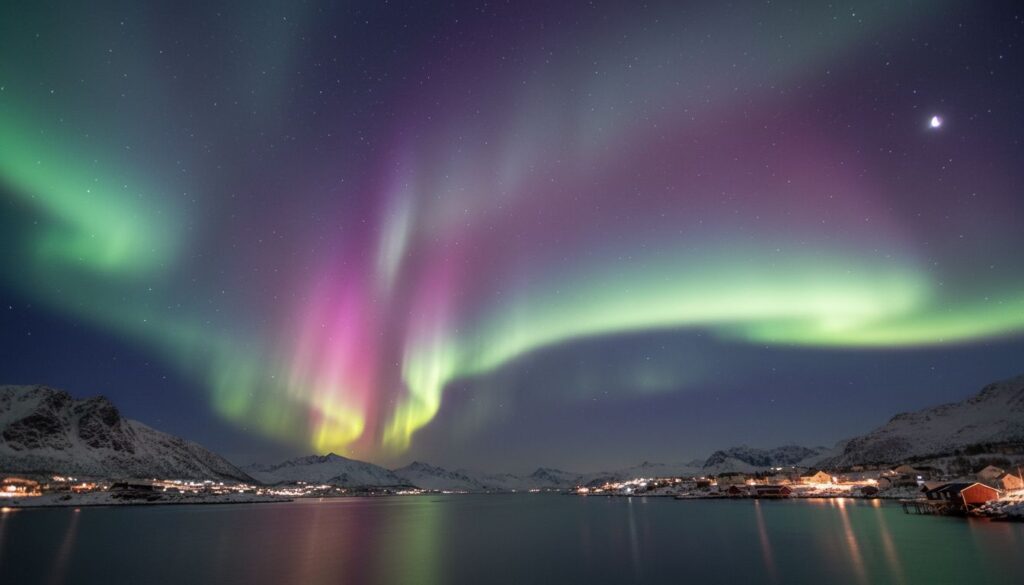
The Northern Lights, or aurora borealis, are collisions between charged particles from the sun and gases in Earths upper atmosphere that cause glowing curtains of color in the sky. Norway sits under the auroral oval – a band around the magnetic pole where activity is concentrated – which makes large parts of northern Norway one of the best places to see strong displays.
Why Norway specifically? Northern Norway combines high auroral activity, a variety of accessible viewing locations above the Arctic Circle, and good tourist infrastructure. Coastal fjords can offer striking foregrounds for photos while inland plateaus often have clearer skies and less light pollution.
When to see the Northern Lights in Norway

Overall season and peak months
- Best season: late September to early April. Nights are long and dark enough for aurora viewing.
- Peak months: October through March. Statistically these months deliver the most frequent and intense displays.
- Best time of night: generally between 18:00 and 02:00 local time, with a peak likelihood between 23:00 and 02:00.
The annual solar cycle also matters. Solar maximum years, when sunspot and solar storm activity are higher, produce more frequent strong auroras. The 2024 to 2026 period is expected to be especially active which increases your odds.
Month-by-month breakdown
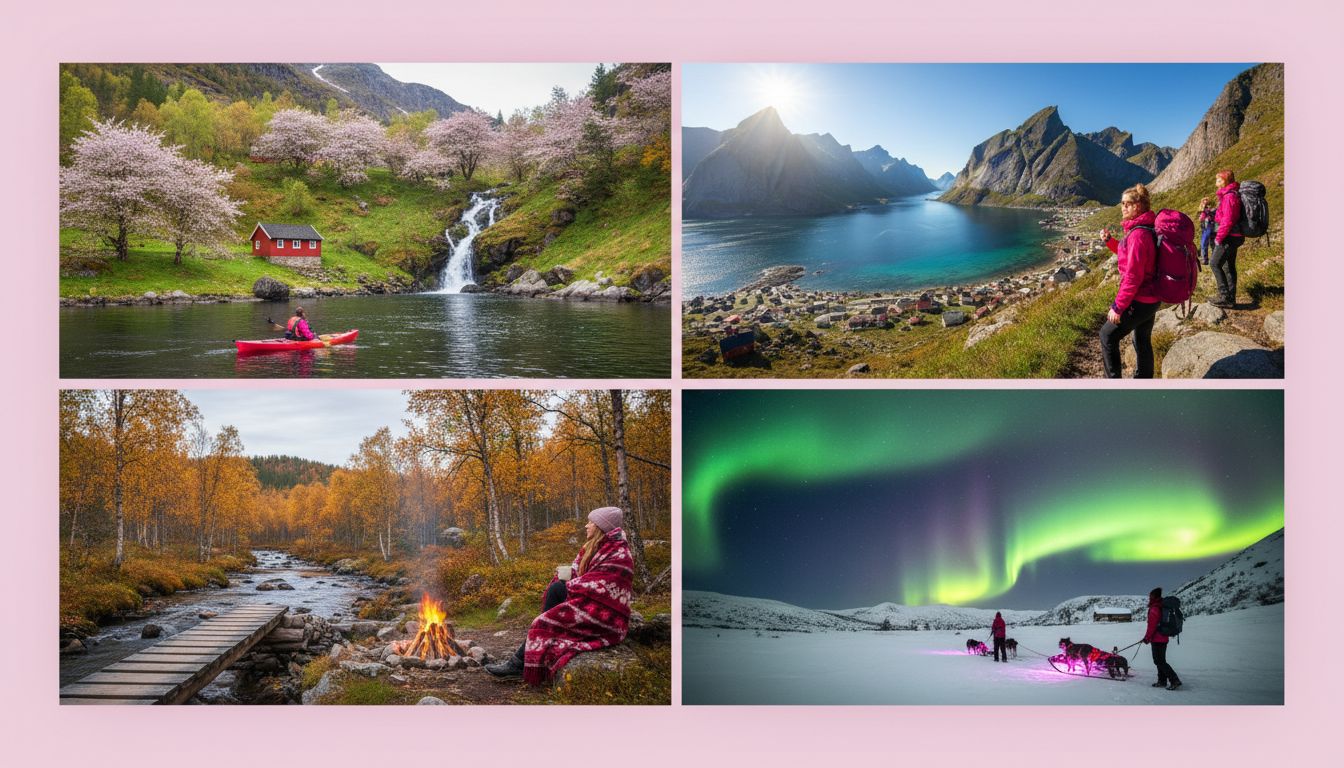
Late September – November
- Why go: Nights lengthen but temperatures are still milder than deep winter. October and November often combine frequent auroral activity with dramatic autumn or early-snow landscapes.
- Weather: Coastal areas can be changeable with more cloud cover; inland and higher elevations often have clearer skies.
- Crowds and prices: Shoulder season – fewer tourists than deep winter and more reasonable rates.
December – February
- Why go: Long nights and the Polar Night in the far north create many hours of darkness, increasing viewing opportunities.
- Weather: Coldest months with frequent clear, crisp nights inland; coastal zones see more cloud and snow systems.
- Crowds and prices: High season for aurora chasers. Book earlier for popular towns like Tromsø.
March – Early April
- Why go: Nights are still long enough for auroras but daylight returns for daytime activities such as snowshoeing and fjord sightseeing.
- Weather: Often more stable periods, and milder temperatures than midwinter in coastal spots.
- Crowds and prices: Shoulder to high season depending on dates, with spring breaks possibly increasing demand.
How many nights do you need?
Seeing the aurora is never guaranteed, but you can increase your odds by staying multiple nights. A rough guide:
- 1 night: 15-30% chance, dependent on conditions.
- 3 nights: 60-75% chance if you base yourself in a good location and chase clear skies.
- 7 nights: 85-95% chance in most northern Norway locations during peak season.
These are approximate probabilities and depend on local weather, solar activity, and where you choose to base yourself.
Where to see the Northern Lights in Norway

Choosing the right base depends on the mix of convenience, landscape, accessibility, and typical cloud cover.
Tromsø
- Why: Often called the aurora capital. Strong infrastructure, many guided tours, and easy international access.
- Best for: First-time aurora chasers, photographers who want varied backdrops, and travelers seeking nightlife and museums between viewings.
- Notes: Nearby fjord and mountain sites provide dramatic compositions but coastal weather can bring clouds.
Alta
- Why: Known for clear skies and relatively dry inland climate, improving visibility.
- Best for: Travelers prioritizing clear nights and quieter towns than Tromsø.
Lofoten Islands
- Why: Dramatic island scenery with steep mountains meeting the sea creates iconic aurora photos.
- Best for: Photographers and travelers who want to combine aurora chasing with coastal landscapes.
- Notes: Maritime weather can be changeable; flexibility helps.
Kirkenes and Finnmark
- Why: Easternmost parts of Norway see long winter darkness and classic Arctic landscapes.
- Best for: Remote aurora experiences, dog sledding, and combining cultural visits with viewing.
Other spots to consider
- Lyngen Alps for mountain views and potential clear skies.
- North Cape for a true Arctic feeling and remote dark skies.
If you want a quick overview of places and practical travel tips across Scandinavia, see our broader Scandinavia travel guides at Scandinavia Holiday.
Weather and day length considerations
Weather and daylight affect both the chance to see auroras and the kinds of daytime activities you can do.
- Cloud cover: Clear skies are essential. Coastal weather systems can bring low clouds; inland plateaus are often drier and clearer.
- Temperatures: Expect from mild-ish autumn temps down to -20 C in inland Arctic areas in midwinter. Dress in layers and bring windproof outerwear.
- Day length: In northern Norway, daylight shrinks quickly from September into December. Above the Arctic Circle, the Polar Night means the sun does not rise for weeks in December and January, increasing total hours of darkness for viewing.
How to read aurora forecasts and tools that help
Understanding forecasts helps you pick nights to go out.
KP index and what it means
- KP index: A global scale from 0 to 9 measuring geomagnetic activity. The higher the KP, the more likely the aurora will be visible at lower latitudes.
- For northern Norway: KP 2-3 can produce visible auroras on clear nights; KP 4 and above usually means strong displays across much of northern Norway.
Other useful metrics
- Solar wind speed and Bz: High solar wind speed and a negative Bz component increase auroral likelihood.
- Cloud cover maps: Local weather apps and satellite cloud layers are vital; an aurora forecast is useless if the sky is cloudy.
Recommended apps and websites
- Real-time aurora maps and alerts from popular apps like My Aurora Forecast, Aurora Alerts, and space weather sites give KP predictions and cloud forecasts.
- Local observatory and meteorological services provide satellite cloud cover. Combine an aurora forecast app with a reliable weather app to pick nights with clear skies.
Practical tips for increasing your chances
- Stay multiple nights: More nights equals better odds.
- Be flexible: If local weather is cloudy, move inland or to higher ground when possible.
- Join guided chases: Local guides know microclimates and will drive to clearer skies, sometimes across fjords and mountain passes.
- Watch the moon: Full moonlight can wash out faint auroras; new moon or crescent phases give darker skies.
- Check local pickup options: Many tours pick up at hotels to simplify logistics.
For ideas on planning activities before and after your aurora nights, check our Inspiration page for suggestions.
Photography: how to capture the aurora
A few targeted tips will improve your photos.
Camera settings
- Use a DSLR or mirrorless camera on manual mode.
- Aperture: as wide as your lens allows, typically f/2.8 to f/4.
- ISO: start around 800 to 3200 depending on your camera's low-light performance.
- Shutter speed: typically 5 to 25 seconds. Shorter exposures catch sharper aurora details, longer exposures capture more light but can blur moving aurora.
- Focus: manual focus at infinity; confirm with a bright star or distant light.
- White balance: set to daylight or between 2800 K and 4000 K and adjust in post if needed.
Gear and technique
- Use a sturdy tripod and remote shutter or timer to avoid camera shake.
- Bring extra batteries and keep them warm in an inner pocket since cold drains battery life.
- Compose with foreground interest such as cabins, trees, or mountains for scale.
Smartphone photography
- Modern phones can capture auroras with long-exposure night modes and tripod mounts.
- Use a dedicated long-exposure app if native mode struggles.
Budget, booking, and timing
Costs vary by month and location. Here are ballpark figures and booking tips.
Typical costs (per person, approximate)
- Flights to northern Norway from major European hubs: $150 to $450 return depending on season and advance booking.
- Midrange hotel per night: $100 to $200 in towns like Tromsø; smaller guesthouses can be less.
- Guided aurora chase: $100 to $200 per person for a 4 to 7 hour tour. Private or photography-focused tours cost more.
- Activities (dog sledding, snowmobiling): $120 to $250.
Booking strategy
- Book 3 to 6 months in advance for peak season travel in December through March.
- For cheaper fares and fewer crowds, consider late September, October, or March.
- Check cancellation policies and choose flexible options when possible.
If you want to explore destinations and logistics, our Destinations page outlines towns and regional highlights across Scandinavia.
Accessibility, families, and safety
- Many aurora tours are family-friendly and offer easy pickup. If mobility is limited, search for tours that advertise accessibility or private transfers.
- Nighttime cold and long waits require planning with children – bring insulated gear and keep outings shorter if needed.
- For remote backcountry viewing, consider hiring a guide and informing someone about your plans.
Cultural context and respect
The Northern Lights appear in local myths across Sámi and Norwegian cultures. The Sámi sometimes see auroras as powerful natural spirits; local guides often share traditional stories during tours. Be respectful when visiting Sámi areas and follow etiquette: ask before photographing people and avoid disturbing cultural sites.
Sample itineraries
3-day essentials
- Day 1: Arrive in Tromsø, explore town, early evening guided aurora chase.
- Day 2: Daytime activity such as dog sledding; evening self-guided or guided hunt for aurora.
- Day 3: Relaxed morning, depart.
5-day active
- Day 1: Arrive and orient in base town.
- Day 2: Guided mountain or fjord aurora chase.
- Day 3: Snowmobile or Sami cultural visit.
- Day 4: Day trip to scenic fjord or photography workshop; evening aurora hunt.
- Day 5: Departure.
7-day thorough
- Mix coastal and inland nights, include 2 guided chases to maximize flexibility, and schedule at least 4 nights for aurora viewing to give a comfortable margin.
Backup plans if you dont see the lights
- Rebook another night for a guided chase if possible.
- Choose alternative winter experiences: fjord cruises, wildlife safaris, Sami cultural visits, or indoor activities like northern lights museums and observatories.
- Use your trip to build a strong photo or cultural portfolio even without auroras; Norway has compelling winter scenery and activities.
FAQs
What is the single best month to visit?
If you must pick one month, February is an excellent compromise: long nights, generally cold but stable weather inland, and plentiful tour options.
Do I need to join a tour?
No, but guided chases greatly increase your odds because guides understand microclimates and drive to clear skies. Independent travelers who rent a car and track forecasts can also succeed.
Can I see the aurora from cities?
Yes if activity is strong, but light pollution reduces visibility. For the best experience, travel outside town or find dark vantage points near the coast or in rural areas.
Is Tromsø necessary?
Tromsø is convenient and well-served, but other locations like Alta, the Lofoten Islands, and Finnmark offer excellent viewing with different landscapes and often fewer crowds.
Final checklist before you go
- Book multiple nights in a northern base during October to March.
- Combine an aurora forecast app with a reliable weather app and learn basic KP index meaning.
- Pack layered, windproof clothing and spare batteries in an inner pocket.
- Reserve at least one guided aurora chase for local expertise.
- Bring a tripod and learn basic camera settings if you want lasting photos.
For help planning routes, accommodations, and activities across Scandinavia, our travel resources and planning team can help – see Scandinavia Holiday or visit our Contact page to get in touch.
Seeing the northern lights in Norway is a combination of smart timing, flexible planning, and a bit of luck. With the right month, a few spare nights, and local forecasts guiding your choices, you increase your odds dramatically and set yourself up for a truly memorable Arctic sky show.
Article created using Lovarank