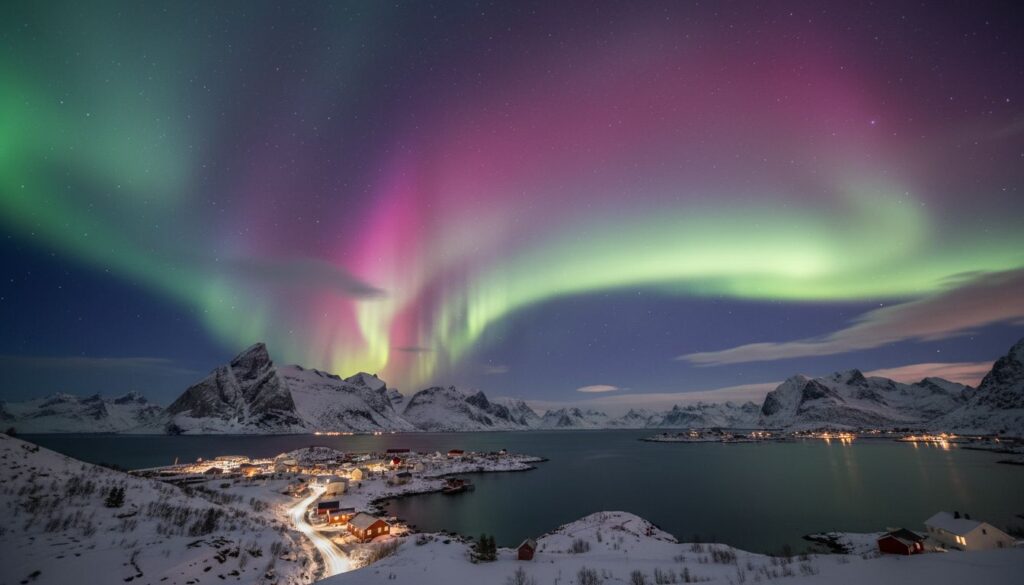
The first time the sky ripples with green, curtains of light fold and unfold above you, you realize why people travel across the globe to chase the aurora. Norway is one of the easiest and most reliable countries to see northern lights, but maximizing your odds takes planning. This guide covers the best places to see northern lights in Norway, the smartest months to go in 2025 and 2026, concrete travel tips, budget tiers, and a practical 5-night plan that accounts for Norway's unpredictable weather.
What are the Northern Lights and why Norway
The northern lights, or aurora borealis, happen when charged particles from the sun hit Earths magnetic field and collide with gases in the upper atmosphere. Those collisions release photons and create the shimmering colors we call the aurora. Norway sits inside the auroral oval where these events are most common, especially north of the Arctic Circle. In 2025 and 2026 the solar cycle is expected to be near a peak which generally increases auroral activity. That means a better chance to see strong displays, but weather and local darkness still matter more than solar activity alone.

Best time to see the northern lights in Norway
The season runs roughly from late September to late March when nights are long and skies are dark. Here is a month-by-month breakdown to help pick the right window for your priorities.
- September: Nights lengthen and temperatures are milder. Storms can still be frequent but early-season green shows are common around the equinox.
- October: Increasing darkness and generally good aurora activity. Coastal areas still have mild weather but more cloud risk.
- November: Nighttime is long. Cold inland spots start to clear more often but expect short, crisp days.
- December: Polar night in some places like Troms and further north reduces daylight to a few hours or none. Heavy cloud can be an issue on the coast.
- January: Very cold in the interior with clearer skies. Great for photographers who want star-filled backgrounds.
- February: One of the best months overall. Nights are still long and weather starts to stabilize.
- March: Another peak period around the equinox with higher geomagnetic activity. Warmer daylight makes daytime activities pleasant too.
Pro tip: Plan at least 3 to 5 nights in region to weather-proof your trip. During solar maxima a short trip can succeed, but clouds are the main risk.
Where to go: Best places to see northern lights in Norway
Below are regions ranked for aurora reliability, accessibility, activities, and practical considerations. Each entry includes why it stands out and where to aim within the area.

Tromsø — the gateway to aurora chasing
Why go: Tromsø has the best infrastructure of any Norwegian aurora hub. International flights, many tour operators, and good accommodation make it an easy base. Many companies run minibus chases, photography tours, and coastal safaris.
Where to watch: Drive 20 to 60 minutes out to dark-sky valleys like Ersfjordbotn or Skulsfjord. For easy access, head to Telegrafbukta beach at the edge of Tromsø when conditions are favorable.
Good for: First-timers, photographers, families, and solo travelers who want group tours.
Accessibility: Very good. Central Tromsø has flat, accessible areas and many operators offer wheelchair-friendly options.
Insider note: Local guides report higher success on multi-night trips. Aim for winter packages that include a chase night plus a stationary camp night.
Lofoten Islands — dramatic coastlines and sea-level auroras
Why go: The Lofoten Islands combine dramatic peaks, fishing villages, and plentiful sea-level viewpoints. Dark skies near Henningsvaer and Reine produce striking reflections on the water.
Where to watch: Reine, Uttakleiv, and Skagsanden beaches are reliable dark-sky locations. Park up and wait by the shoreline for reflections.
Good for: Photographers and travelers wanting scenic daytime treks plus aurora nights.
Accessibility: Roads are narrow and winding. Winter driving can be challenging; guided tours are recommended if you are not experienced with Arctic winter driving.
Senja and Skibotn — the quieter alternatives with microclimate advantages
Why go: Senja is often called Norway in miniature with fjords and steep mountains that create postcard-perfect foregrounds. Skibotn, near the Lyngen Alps, benefits from a local microclimate that gives clearer skies more often than surrounding coastal spots.
Where to watch: Bergsbotn viewpoint in Senja and the inland valley around Skibotn. Both have lower light pollution and complement aurora viewing with dramatic topography.
Good for: Travelers who want fewer crowds and high-quality sky conditions.
Accessibility: Senja is reachable from Tromsø by car or ferry. Skibotn is a longer drive east of Tromsø but rewarded with clearer nights.
Alta — the historic polar town
Why go: Alta has long been a scientific outpost for aurora study and hosts stable inland weather. It is well-suited for those who want predictable conditions and cultural experiences.
Where to watch: Head out of town toward the Kåfjord valley for unlit skies.
Good for: Families, cultural travelers, and those who prefer less driving at night.
Kirkenes — combine aurora with Arctic activities
Why go: On the far northeast border with Russia, Kirkenes is remote and has long dark nights. Winter activities include king crab safaris and snow hotels.
Where to watch: Areas just outside the town and along fjords away from streetlights.
Good for: Adventure travelers who want a remote experience and unique winter activities.
Svalbard — polar nights and extreme aurora viewing
Why go: Svalbard sits well above the Arctic Circle. During polar night there is continuous darkness for weeks, which increases opportunity for aurora. Travel here is more expensive and seasonal restrictions can apply.
Where to watch: Longyearbyen outskirts and small guided snowmobile or boat trips when safe.
Good for: Experienced Arctic travelers, photographers, and researchers.
North Cape — the literal edge of Europe
Why go: If you want the theatrical backdrop of cliffs and sea, Nordkapp can deliver remote, dramatic aurora vistas. The area sees fewer visitors than Tromsø.
Where to watch: The Nordkapp plateau and nearby dark headlands.
Good for: Travelers combining road trips along the Arctic coast.
How long should you stay: the 5-night northern lights strategy
Short trips of 1 to 2 nights are risky because cloud cover can ruin a single opportunity. Here is a practical 5-night approach that balances weather risks with sightseeing.
- Night 1: Arrival and local conditions check. Book a local aurora briefing and a short introductory chase to learn how guides read forecasts.
- Night 2: Guided chase to maximize the odds. Guides will move you to clear skies and have warm shelters available.
- Night 3: Self-guided night at a recommended dark-sky spot if you have a rental car or a second guided tour that uses different terrain.
- Night 4: Reserve a longer overnight experience such as a snowcamp or aurora boat trip for a change of perspective.
- Night 5: Buffer night to chase any missed opportunities and enjoy daytime activities.
Tips: If you cannot stay 5 nights, choose a location with a high density of operators like Tromsø and plan your trip between late January and March to increase success chances.
What else to do while you wait
Northern Norway offers many winter activities that pair well with aurora nights.
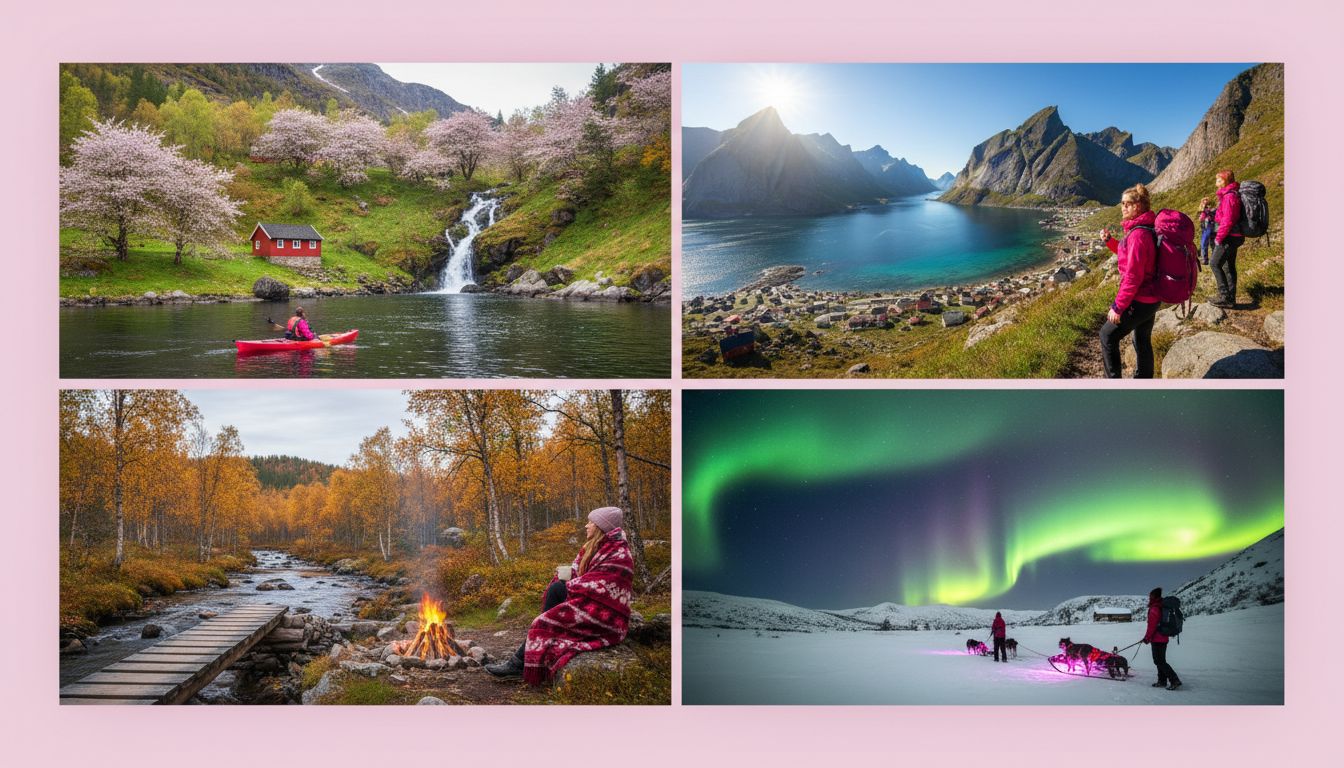
- Dog sledding and reindeer experiences. These often include cultural insights into Sami traditions.
- Snowmobiling across inland plateaus for daytime adventure and remote aurora bases at night.
- Whale watching in early season near Tromsø for a dramatic daylight experience.
- Fjord cruises and coastal photography on Lofoten for scenic days.
For more travel inspiration in the region, see Inspiration – Scandinavia Holiday.
Practical tips: what to pack, how to plan, and photography
Clothing and gear
- Dress in layers. Base layer, insulating mid-layers, and a windproof, waterproof outer shell are essential.
- Insulated boots, wool socks, warm gloves, and a warm hat matter more than fashion.
- Hand warmers and a thermos with a hot drink are lifesavers during long waits.
Camera setup for aurora photography
- Use a DSLR or mirrorless camera with manual controls.
- Wide-angle lens with a fast aperture (f2.8 or wider if available).
- Set ISO between 800 and 3200 depending on your sensor, aperture at f2.8 to f4, and shutter speed between 5 and 20 seconds. Adjust as needed.
- Use a sturdy tripod and a remote shutter release or intervalometer to avoid camera shake.
Forecasts, apps, and reading the sky
- Use aurora forecast websites and apps to check the Kp index and local cloud cover. Remember a high Kp index increases likelihood but not certainty of displays.
- Local weather apps and satellite cloud maps are crucial. Guides often combine both sources to decide where to drive.
Booking timeline and cost expectations
- Book flights and hotels as early as possible, especially for peak months (January to March) during the 2025-26 solar peak. Reserve guided tours 3 to 4 months in advance for the best companies.
Budget tiers per person for a 4 to 6 night trip excluding international flights:
- Budget: $800 to $1,300. Stay in hostels or budget cabins, self-cater, and join fewer guided tours.
- Mid-range: $1,500 to $2,500. Includes mid-range hotels, several guided tours, and local activities.
- Luxury: $3,000 and up. Includes boutique lodges, private tours, and premium experiences like snow hotels or private boats.
Prices fluctuate with exchange rates, availability, and how many guided nights you book. Tours themselves often range from $120 for a basic group chase to $600 for private or overnight experiences.
Accessibility and solo traveler considerations
- Tromsø and larger towns are the easiest for travelers with limited mobility. Many operators offer accessible vehicles and shorter travel distances from town centers.
- Solo travelers should choose reputable operators that provide group chases for safety and social company. Always tell your hotel or host your plans if you go out at night on your own.
For more information about destinations and logistics, check Destinations – Scandinavia Holiday.
What to do if you dont see the aurora
Even with careful planning, the aurora can hide behind clouds. Here are backup plans and money-saving practices:
- Use your buffer nights for extra chases. Guides will often offer a discounted repeat if you dont see the lights on a booked tour.
- Focus on daytime highlights like dog sledding, cultural visits, or scenic drives so the trip still feels worthwhile.
- Look for refund or rescheduling policies when booking tours. Good operators will offer weather guarantees or credits.
Quick checklist before you go
- Book at least 3 to 5 nights in an aurora region.
- Reserve at least one guided chase and one alternative aurora experience like a boat or camp.
- Pack layered clothing, a tripod, spare batteries, and a headlamp with red light mode.
- Install one aurora forecast app and one reliable local weather app.
If you have questions about guided options or want to contact a local expert before you travel, see the Contact – Scandinavia Holiday page for assistance.
Final thoughts
Norway remains one of the best places to see northern lights in Norway for a reason. With the approaching solar maximum in 2025 to 2026, your odds are better than in quieter solar years, but the single biggest determinant is local weather and darkness. Pick a region that matches your travel style, allow multiple nights to chase clear skies, and build your trip around both aurora opportunities and memorable daytime activities. With a little planning and flexibility you have a very good chance of witnessing one of the most unforgettable natural shows on Earth.
Happy chasing and clear skies.
Article created using Lovarank