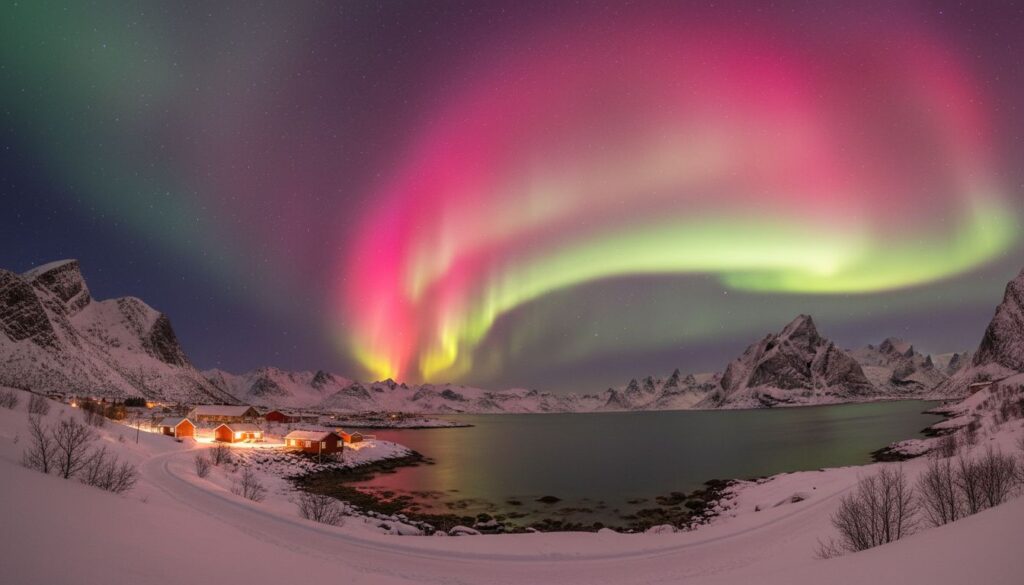
Yes, there are northern lights in Norway, and Norway is one of the best places in the world to see them, especially in Northern Norway above the Arctic Circle. The catch is that they are never guaranteed. You need darkness, clear skies, and enough geomagnetic activity for the aurora to show up, and summer daylight in the far north makes the display almost impossible to spot. (visitnorway.com)
If you are mapping out a bigger trip, the destinations page is a useful place to compare Norway bases before you lock in dates.
Where in Norway are the northern lights easiest to see?

Norway's most reliable aurora belt runs through Northern Norway, and Visit Norway highlights places such as Tromsø, Alta, Lyngen, Senja, Lofoten, the North Cape, Kirkenes, Vesterålen, and Svalbard. Tromsø is the best-known hub and one of the easiest places to base yourself if you want restaurants, tours, and good transport links, but it can get busy in winter, so autumn is often a calmer time to go. Alta is another strong choice because it sits in the high Arctic and is known for stable, dry winter conditions and very little urban light pollution. (visitnorway.com)
In the far south, the aurora is more of a bonus than a plan. Visit Norway says you can sometimes see the northern lights in Trøndelag, Western Norway, and Southern Norway during periods of increased solar activity, and NOAA explains that stronger geomagnetic storms push the auroral oval farther toward lower latitudes. In practical terms, that means Oslo, Bergen, and much of southern Norway are not dependable aurora bases. (visitnorway.com)
If you want a trip that feels like Norway from start to finish, not just a quick aurora stop, start with our inspiration page and build the rest of the route around the same northern region.
Best bases, depending on your travel style
- Tromsø if you want the easiest all-round base, with a lot of aurora trips, city services, and flight access. (visitnorway.com)
- Alta if you want a smaller, quieter high-Arctic setting with a strong northern lights reputation. (visitnorway.com)
- Lofoten or Senja if dramatic scenery matters as much as the aurora itself. (visitnorway.com)
- Kirkenes, the North Cape, or Svalbard if you want to push farther north and maximize the Arctic feeling of the trip. (visitnorway.com)
When is the best time to see the northern lights in Norway?

If you want the shortest answer, think late September through early April. The practical sweet spot is usually October to March, because you need enough darkness and enough aurora activity to line up on the same night. Visit Norway says aurora activity is often strongest in September and October, and again in March and April, while NOAA also points to the spring and fall equinoxes as especially favorable periods for aurora watching. (visitnorway.com)
The reason winter is so useful is simple. The aurora can only be seen when it is dark, and in the north that darkness lasts for weeks or even months. The polar night brings especially long viewing windows in places such as Tromsø, Alta, Kirkenes, the North Cape, Lofoten, Vesterålen, and Svalbard. On the other hand, the midnight sun in summer keeps the sky too bright for reliable aurora viewing. (visitnorway.com)
Here is the practical version of the season breakdown:
- September and October are a smart shoulder-season choice. The nights are dark enough, the weather is often less severe than deep winter, and the aurora activity can be strong. (visitnorway.com)
- November through February is the classic winter window. Darkness is at its deepest, especially in polar-night areas, so this is the easiest time to build a trip around aurora watching. (visitnorway.com)
- March and April can be excellent too, especially because activity often peaks around the spring equinox. You also get a little more daylight for other activities. (visitnorway.com)
- May through August is the wrong season for aurora hunting in most of Norway because the midnight sun or extended daylight makes the lights effectively unwatchable. (visitnorway.com)
If you are asking how long to stay, the honest answer is that one night is a gamble. Three nights is much better, and five nights gives you a far more realistic chance to work around cloud cover and low activity. That is a practical recommendation based on the fact that darkness, weather, and geomagnetic activity all have to cooperate. (swpc.noaa.gov)
What conditions do you actually need?

The northern lights are caused by charged particles from the Sun colliding with gases high in Earth's atmosphere, and the result is the glow we see overhead. Earth's magnetic field channels that activity toward the poles, which is why Norway's far north works so well. When geomagnetic activity increases, the aurora can extend farther south, but you still need the sky to be dark and cloud-free to see it. (science.nasa.gov)
That is why so many aurora trips are really weather-and-timing trips. A strong forecast is great, but if low clouds sit over the fjords all night, you may still miss the show. The full moon can also make the sky look washed out even when the aurora is present, so darker nights usually help. NOAA also notes that the best viewing hours are often around 10 p.m. to 2 a.m. local time. (swpc.noaa.gov)
A useful mental model is this: aurora activity tells you whether the lights may appear, while cloud cover tells you whether you can actually see them. You need both. That is also why I would treat a one-night aurora stop as a gamble and a multi-night stay as the sensible plan. (swpc.noaa.gov)
How to read aurora forecasts without overthinking them
When you check a forecast, start with two things: aurora activity and cloud cover. NOAA's aurora forecast is a short-term 30 to 90 minute model, and its Kp index runs from 0 to 9. On NOAA's scale, Kp 5 or higher indicates a geomagnetic storm. Higher Kp values mean the auroral oval can expand farther from the poles. (swpc.noaa.gov)
That does not mean you should chase the biggest number you can find. In Northern Norway, even moderate aurora activity can be enough if the sky is dark and clear. A decent forecast plus the right weather is often better than a spectacular forecast trapped behind cloud. For a local tool, Visit Norway recommends the NorwayLights app, which is designed to help you find the best time to see the aurora. (visitnorway.com)
If you want one simple routine, use this:
- Check cloud cover for the exact town or coastline you are staying in.
- Check an aurora forecast near sunset and again later in the evening.
- Be ready to move if a guide or local app points you toward a clearer gap in the weather.
- Stay patient long enough for the sky to darken fully. (swpc.noaa.gov)
The smartest way to plan an aurora trip in Norway
If the northern lights are the main reason for your trip, choose a base north of the Arctic Circle and stay at least a few nights. That gives you time for the weather to change, which matters just as much as aurora activity. For first-timers, Tromsø is the easiest all-round base because it is the main northern lights hub with lots of tours and transport options. If you want a quieter, more wilderness-like trip, Alta, Lyngen, Senja, the North Cape, and Lofoten are all strong alternatives. Svalbard is even farther north, but it is also its own kind of Arctic trip. (visitnorway.com)
A guided tour is worth considering if you do not want to drive on unfamiliar winter roads. One of the big advantages is that local guides can choose viewpoints based on real-time weather and atmospheric conditions, then move if the first spot is clouded in. That is why many Norway aurora operators focus on flexible minibus trips, cruises, or wilderness camps. If you prefer to build a larger itinerary around that kind of trip, our inspiration page is a good place to start. (visitnorway.com)
Best bases at a glance
- Tromsø works well if you want the widest choice of tours, hotels, and restaurants. (visitnorway.com)
- Alta is a strong option if you want a smaller Arctic town with very good winter conditions. (visitnorway.com)
- Lofoten and Senja are ideal if you want iconic fjords, fishing villages, and a dramatic backdrop for photos. (visitnorway.com)
- Cruises can help you get away from light pollution, which is useful when the sky is clear offshore. (visitnorway.com)
What should you pack? Warm layers, insulated boots, gloves, a hat, and a camera or phone with night-mode settings. If you go out on your own, keep your route simple and choose dark, open viewpoints rather than busy roadside pullouts. Visit Norway's local tips also stress basic road safety when people are out hunting the lights on foot. (visitnorway.com)
FAQs about the northern lights in Norway
Are there northern lights in Norway all year?
No. You can only see them when it is dark enough, so summer in Norway is usually a non-starter because of the midnight sun and long daylight. (visitnorway.com)
Can you see the northern lights in Oslo, Bergen, or Trondheim?
Sometimes, but not reliably. Visit Norway says the lights can occasionally be seen in Trøndelag and in Western and Southern Norway during periods of increased solar activity. In practice, that means these cities are more of a bonus-stop option than a serious aurora strategy. (visitnorway.com)
What month is best for seeing them?
If you want one answer, pick February, March, October, or November. Those months usually give you a strong mix of darkness and aurora activity, with March and October sitting close to the equinoxes that NOAA highlights as especially favorable. (visitnorway.com)
Do you need a guide?
Not always, but a guide can make a real difference, especially if you are new to Norwegian winter roads or short on time. Guided operators in places like Alta and Tromsø use real-time weather and local knowledge to move toward better viewpoints. (visitnorway.com)
Are cruises better for aurora watching?
They can be. A cruise gets you away from city lights and light pollution, which is useful when the skies are clear and the ship can move toward better conditions. That does not guarantee a sighting, but it can improve your odds. (visitnorway.com)
So, are there northern lights in Norway? Absolutely, and the country's far north offers some of the best viewing in the world. If you plan around the dark season, build in several nights, and choose a base above the Arctic Circle, you give yourself the best possible chance. For more route ideas or custom planning help, you can browse our destinations page or contact us. (visitnorway.com)
Article created using Lovarank