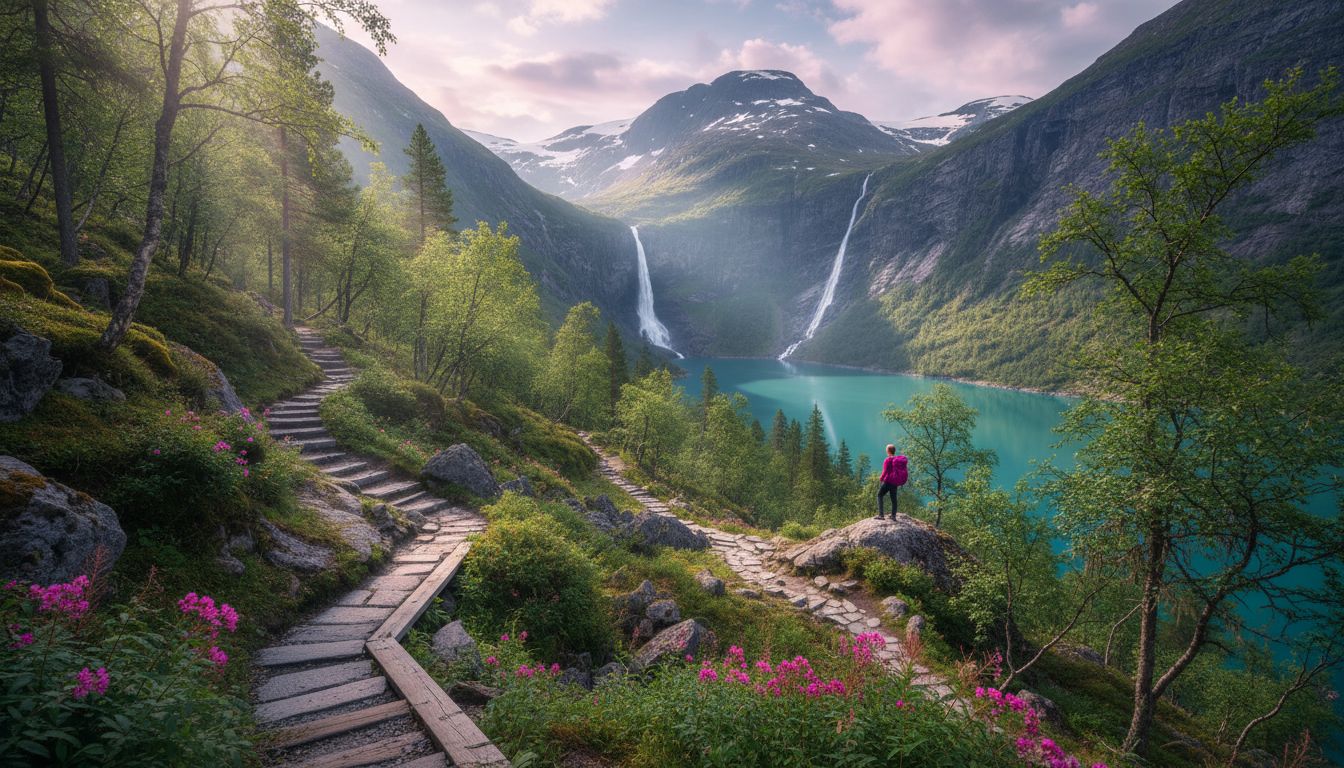
The Bergen Railway Norway travelers search for is not just a way to get from Oslo to Bergen. It is a journey that changes character several times in a single ride, starting in the city, climbing into the mountains, crossing a vast high plateau, and then dropping toward the fjords on the west coast. If you want one trip that captures a lot of Norway’s natural variety without the stress of driving, this is the rail route to know.
What makes it especially appealing is how easy it is to experience. You can ride it in a single day, take the night train if you want to save time, or build it into a longer Norway itinerary with stops in mountain villages, ski towns, and fjord country. The trip is famous for its scenery, but it is also practical, well connected, and full of useful options for different types of travelers.
Why the Bergen Railway belongs on a Norway itinerary

The Bergen Railway, or Bergensbanen, is one of those rare routes that feels like an attraction in its own right. It links Norway’s two largest cities, but the real story is everything in between: forests near Oslo, lake country, ski towns, open mountain terrain, and the dramatic westward descent toward Bergen.
It also fits neatly into a larger trip. If you are planning more than one stop in Norway, it helps to think of the train as the spine of your route and then layer in towns, fjords, and outdoor experiences around it. Our Scandinavia holiday destinations worth pairing with the train ride can help you decide where Bergen, Geilo, Voss, or the fjords fit into a broader loop.
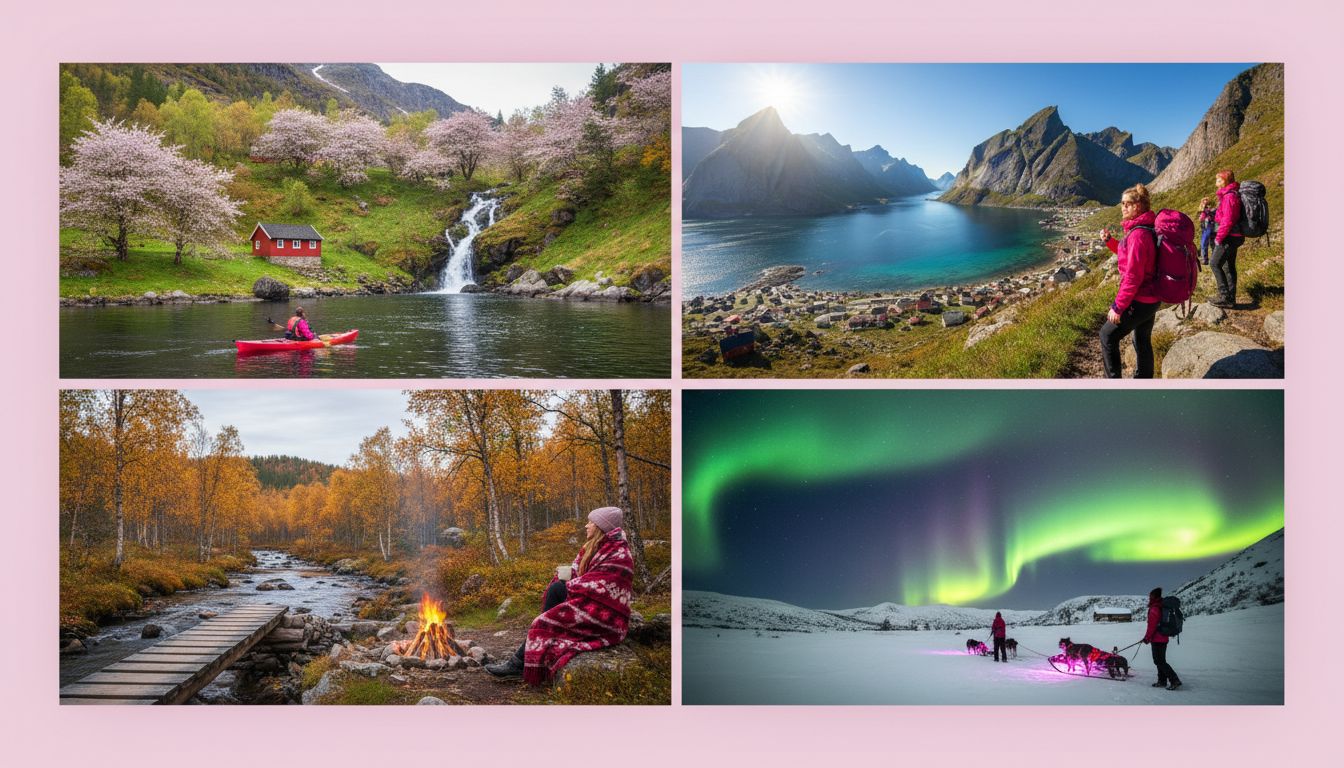
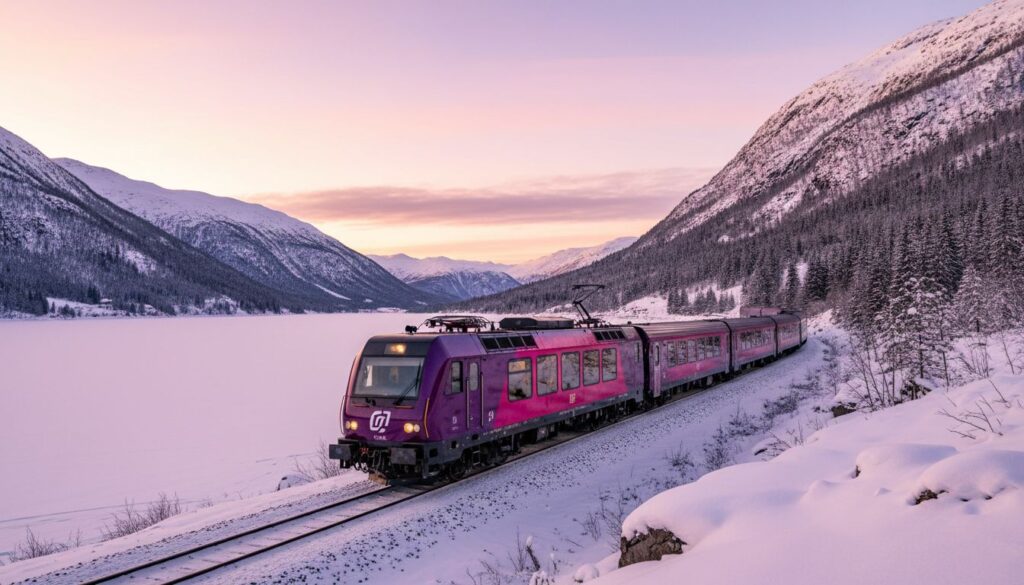
Another reason the Bergen Railway stands out is its seasonal personality. In summer, the hills are greener, daylight lasts longer, and the views feel wide open. In winter, the landscape turns stark and snowy, and the route can feel almost cinematic. That change is a big part of the appeal. You are not just buying a train ticket, you are choosing a version of Norway.
The route is also famous for being a clean, low-effort way to see interior Norway. You do not need to worry about parking, winter roads, or watching the scenery from behind the wheel. You can simply sit back and let the country unfold outside the window.
Bergen Railway Norway fast facts
Here is the quick version if you are planning the trip and want the essentials first.
- Route: Oslo to Bergen
- Length: 471.25 km
- Journey time: about 6.5 to 7.5 hours, depending on service
- Operator: Vy
- Departure frequency: around 6 to 7 trains per day
- Opened: 1909
- Construction period: roughly 1894 to 1909
- Highest point: 1,237 meters above sea level
- Stations: 21 between Oslo and Bergen
- Tunnels: 182
- Rail type: electrically powered
Those numbers help explain why the Bergen Railway is so well known. It is long enough to feel like a real cross-country journey, but direct enough to make sense for most travelers. It is also a technical achievement, which is part of why Norwegians still speak about it with pride.
What the journey looks like from start to finish

One of the best things about the Bergen Railway is the way the scenery evolves. The route is not one single landscape. It is several landscapes stitched together, each with its own mood.
Oslo to Geilo
The first part of the trip feels relatively gentle. As the train leaves Oslo, you pass through a more urban and suburban setting before the scenery opens up into valleys, rivers, and lake country. This section is a good warm-up because it gives you a gradual transition from city to countryside.
After that, the terrain starts to rise. The hills become more pronounced, the air feels cooler, and the mountains begin to show themselves. Geilo is a key milestone on the route and one of the most useful stops for travelers who want outdoor activities. In winter, it is a ski destination. In summer, it becomes a base for hiking, biking, and other mountain adventures.
Geilo to Voss
This is where the Bergen Railway becomes especially dramatic. The train climbs onto the Hardangervidda plateau, which is one of the most memorable parts of the whole route. The plateau feels open, remote, and expansive, with a kind of quiet that is hard to forget.
Finse is the station many first-time riders remember most. It sits at the highest point on the line and is only reachable by train. If you like outdoor adventure, this is the kind of place that makes the whole journey feel worthwhile. In summer, people use it as an access point for Rallarvegen, one of Norway’s most famous cycling routes. In winter, it is a good place for snow-based activities.
Myrdal is another important name to know because it is where the Bergen Railway connects with the Flåm Railway. That makes it a natural place to break the trip if you want to turn a simple train ride into a longer fjord adventure. If you like that kind of trip planning, our Scandinavia travel inspiration page is a useful place to look for route ideas and add-ons.
Voss is the next major highlight. Known as an adventure town, it offers rafting, hiking, cycling, skydiving, and easy access to mountain views. If you are not in a rush, it is one of the most practical places to stop for a night or two.
Voss to Bergen
The final stretch brings the landscape back down toward the coast. The mountains are still there, but the sense of elevation softens. You begin to see deeper valleys, more water, and eventually the feeling that you are moving toward a fjord city.
This part of the journey is often shorter than people expect once the views start changing quickly. Bergen feels like a proper end point, with its harbor setting, historic streets, and easy access to the rest of western Norway.
The major stops worth knowing
You do not need to get off at every station, but these are the most useful ones for travelers:
| Stop | Why it matters |
|---|---|
| Oslo S | Main departure point and easiest city access |
| Flå | Close to Hallingdal activities and Bjørneparken |
| Gol | Useful base for mountain and ski access |
| Geilo | Classic mountain town for outdoor sports |
| Finse | Highest point on the line and a standout scenic stop |
| Myrdal | Transfer point for the Flåm Railway |
| Voss | Adventure town with strong mountain views |
| Bergen | Final stop, city base, and gateway to the west coast |
If you are deciding where to break the journey, the short list is usually Geilo, Finse, Myrdal, and Voss. Those are the stops that add real value to the trip rather than simply stretching it out.
The history of the Bergen Railway in brief
The Bergen Railway opened in 1909 after about 15 years of construction. That alone tells you something about the scale of the project. Building a line across mountains and high plateaus in Norway was never going to be simple, and that challenge is part of what gives the route its reputation.
The railway was a major engineering achievement for its time. It connected east and west Norway in a more direct and reliable way, and it quickly became more than a local transport line. It became a national symbol of how hard landscapes could be crossed with planning, patience, and a lot of engineering.
There is also a human side to the history. For travelers, the line has always represented connection. For the communities along the route, it brought access, trade, jobs, and easier movement between regions. That practical role is still important today, which is why the Bergen Railway remains both a scenic trip and a working transport line.
How to plan your trip on the Bergen Railway

A little planning goes a long way on this route. The Bergen Railway is popular, and the best seats and departure times can go quickly, especially in peak travel seasons.
Book early if you want the best choice
Vy lets you buy tickets up to 115 days before departure, so it is smart to book ahead if your dates are fixed. Seat reservations are included on the Bergen Line, and you can normally choose your seat with the seating map when you book. If you select a Lowfare ticket, your seat is assigned automatically.
That means you should not wait until the last minute if you care about a specific departure or seat position. This is especially true in summer, around holidays, and during winter travel periods when schedules can be more limited.
Know which side to sit on
There is no single perfect seat for the entire route, but there is a useful rule of thumb. If you are traveling from Oslo to Bergen, the left-hand side is better for Hardangervidda views, while the right-hand side is stronger for fjords and valleys in western Norway. If you are going the opposite direction, the advice reverses.
If your main goal is scenery, that means it is worth deciding what kind of landscape you care about most. Mountains and plateau views favor one side, while the western descent favors the other. If you can book a flexible seat, that makes the decision much easier.
What to expect on board
The onboard experience is comfortable and straightforward. You can get hot and cold dishes in the café, along with pastries, desserts, and drinks. There are also options for families, plus carriages for people who want extra comfort or more private space.
A few practical points are worth keeping in mind:
- Wi-Fi is not always reliable on this line, so download what you need before departure.
- The train has luggage space, but you should keep your bags manageable.
- You can bring up to three pieces of luggage with a combined weight limit of 30 kg.
- Bicycle space must be reserved in advance.
- Accessibility is available, but some wheelchair bookings need to be arranged for specific stations.
If you are traveling with children, the Bergen Line is also useful because family-friendly options exist, including space for strollers and family carriages on the Oslo-Bergen route. If you are traveling as a group, there are compartment options as well.
Best time of year to ride it
The answer depends on what you want to see.
- Summer: best for long daylight, greener landscapes, hiking add-ons, and cycling stops.
- Autumn: great for color and quieter travel periods.
- Winter: beautiful and dramatic, but daylight is limited.
- Spring: a good compromise if you want snow in the mountains and a softer transition into warmer weather.
For winter trips, the biggest thing to remember is daylight. On the Hardangervidda section, the useful daylight window is shorter, so morning or early afternoon departures usually give you the best chance of seeing the landscape clearly.
Train, car, or flight?
If speed is your only concern, flying wins. If flexibility is your priority, driving gives you more freedom. But if the journey itself matters, the train is usually the best choice.
The Bergen Railway lets you watch Norway change in real time, and that is something no airport transfer or highway drive can really match. For many visitors, it is the part of the trip they remember most.
Is the Bergen Railway worth it?
Yes, especially if this is your first time in Norway or if you only have time for one long scenic train ride. It is practical enough to fit into a normal trip, scenic enough to feel special, and flexible enough to work for solo travelers, couples, families, and groups.
It is also a strong choice if you want a trip that does not feel rushed. You can treat it as transport, but you can just as easily treat it as an experience. That is the sweet spot where the Bergen Railway really shines.
For more ideas on how to connect this route with other parts of Norway and the Nordic region, browse more Nordic travel guides and local experiences.
Frequently asked questions about the Bergen Railway
How long is the Bergen Railway?
The main Oslo to Bergen journey usually takes about 6.5 to 7.5 hours, depending on the service.
Is the Bergen Railway scenic?
Very much so. It is known for mountain scenery, the Hardangervidda plateau, valley views, and the westward descent toward Bergen.
Can you do Oslo to Bergen in one day?
Yes. That is one of the most common ways to ride it, and it works well if you want a single scenic day journey.
Does the Bergen Railway run in winter?
Yes, it runs year-round. Winter can be beautiful, but it also means shorter daylight and occasional weather-related disruptions.
Is there food on board?
Yes. The Bergen Line has a café with hot and cold dishes, pastries, desserts, and drinks.
What is the highest point on the line?
The highest point is 1,237 meters above sea level.
Should I book ahead?
Absolutely. If your schedule is fixed or you want a specific seat, booking early is the safest approach.
Is the Bergen Railway the same as the Bergen Line?
People often use the terms interchangeably. In travel conversations, they usually refer to the same Oslo to Bergen route.
Article created using Lovarank