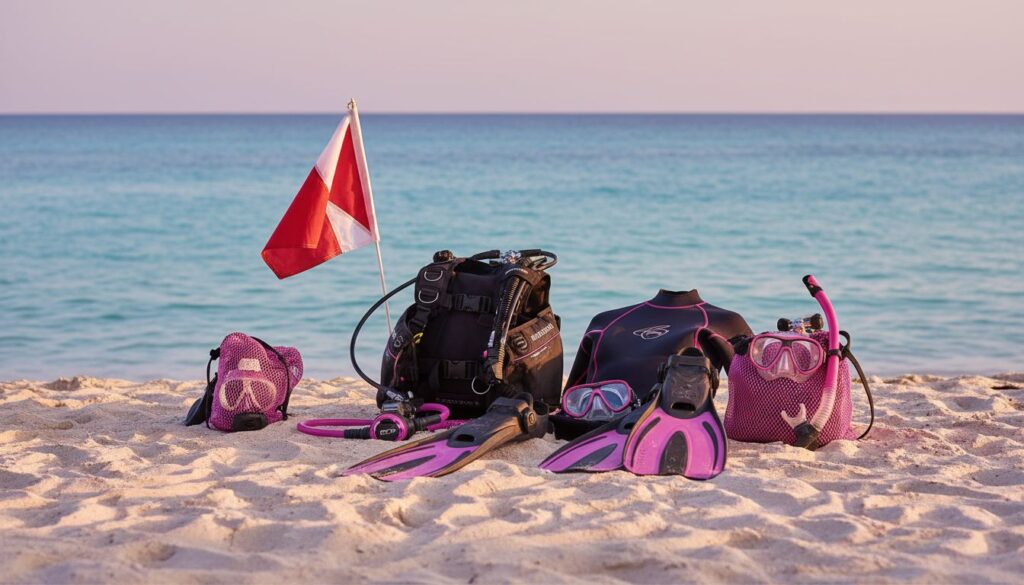
Diving is one of those words that changes meaning depending on the setting. For some people, it means a judged athletic sport with clean entries and precise form. For others, it means slipping beneath the surface with a mask and regulator, then exploring reefs, wrecks, or clear blue open water. It can also mean freediving, high diving, or simply learning how to enter water safely and with control.
That wide range is exactly why a good guide matters. If you have ever searched for diving and felt unsure whether you were reading about an Olympic event, a travel activity, or a beginner scuba lesson, you are not alone. This guide breaks the topic into plain English, so you can understand the main types of diving, how each one works, what gear is involved, and how to get started safely.
What diving means
At its simplest, diving means entering water intentionally. In practice, the word covers several different activities, and the right meaning depends on context.
- Competitive diving is the sport most people see in the Olympics and major championships.
- Scuba diving uses breathing equipment so you can stay underwater and explore.
- Freediving is underwater diving on a single breath.
- High diving is a separate discipline that takes the sport to much greater heights.
- Recreational diving is the broad casual category that often overlaps with scuba.
That is why one search term can lead to very different answers. The good news is that the shared ideas are the same across all forms of diving. You still need control, awareness, technique, and respect for water conditions.
Main types of diving
Competitive diving
Competitive diving is a precision sport. Athletes launch from a springboard or platform, perform rotations and twists in the air, and enter the water with as little splash as possible. Judges evaluate the quality of the dive, the timing, the body position, and the entry.
This is the version of diving that rewards explosive power, body control, and repeatable technique. It is not about simply jumping in. It is about making a difficult movement look calm and clean.
Scuba diving
Scuba diving is what most people mean when they talk about exploring underwater. The diver carries a tank of compressed gas and breathes through a regulator. That lets the diver remain submerged far longer than a breath-hold dive.
Scuba diving can be recreational, educational, or professional. A beginner may start in a pool or calm water, then move into open-water training once the basics are comfortable. If your first dive trip is part of a bigger holiday, it helps to plan the rest of the journey too, and the destinations guide is a useful place to start thinking about that wider itinerary.
Freediving
Freediving strips everything down to one breath. There is no tank and no regulator, which makes relaxation, efficient movement, and breath control especially important.
Many people are drawn to freediving because of its simplicity. It feels quiet, light, and meditative. It also demands discipline, because your time underwater is limited by your breath and comfort level, not by equipment.
High diving
High diving takes the athletic side of the sport to another level, literally. Divers jump from very high platforms and perform complex aerial skills before entering the water.
Because of the height involved, this is a highly specialized discipline with strict technique and safety standards. It is dramatic to watch, but it is also one of the clearest examples of how much training and control diving requires.
How competitive diving works

Competitive diving looks graceful from the stands, but every second of the dive is built on training. Divers work on approach, takeoff, body alignment, rotations, twists, and entry. The aim is to create height and control, then cut into the water with a minimal splash.
Most major competitions revolve around two main apparatuses:
| Event type | What it is | What it rewards |
|---|---|---|
| Springboard diving | A flexible board that bounces | Timing, rhythm, takeoff control |
| Platform diving | A fixed tower platform | Power, precision, air awareness |
Springboard diving uses the board’s rebound to help generate lift. Platform diving removes the bounce and puts the emphasis on pure body control from a fixed height. In major competitions, the platform is often 10 meters.
Scoring usually reflects two things. First, judges look at how well the diver performed the movement. Second, the dive’s degree of difficulty affects the final result. In synchronized diving, judges also look at how closely the two divers match each other through the takeoff, rotation, and entry.
A useful way to think about competitive diving is this: the harder the dive, the more impressive the execution has to be. Difficulty alone is not enough. Clean technique is what separates a good dive from a great one.
In diving, control matters more than speed.
How scuba diving works

Scuba diving is built around a simple idea, breathe underwater and move with calm efficiency. In reality, it is a skill that combines equipment knowledge, body awareness, and good habits.
A basic scuba setup usually includes:
- Mask
- Fins
- Regulator
- Tank
- Buoyancy control device, often called a BCD
- Weight system
- Exposure suit, such as a wetsuit or drysuit
- Dive computer
You do not need to own all of this before you begin. Many training centers provide rental gear, which makes the first experience much easier.
What beginners usually learn first is not how to go deep, but how to stay relaxed. That means breathing steadily, equalizing your ears as you descend, and controlling your buoyancy so you neither sink too quickly nor float unpredictably. Good buoyancy also protects the environment, because it helps divers avoid damaging reefs, stirring up silt, or bumping into fragile surfaces.
A typical beginner path looks like this:
- Choose a certified training agency or dive center.
- Complete the classroom or online theory.
- Practice basic skills in a pool or confined water.
- Do supervised open-water dives.
- Earn your certification and keep building experience.
For many people, the first step is not a full certification course but a try-dive or introductory session. That is a smart way to see whether breathing underwater feels natural before committing to the full process.
If you are already thinking about where your first certification trip should happen, pair the training with a destination that fits your schedule and comfort level. The inspiration page can help you shape the kind of trip that feels exciting without being overwhelming.
Safety matters in every kind of diving
Safety is one of the biggest themes in diving because water is unforgiving when people rush, panic, or ignore warning signs. The good habits are usually simple, but they matter a lot.
The basics every diver should respect
- Never hold your breath while scuba diving. Pressure changes can make that dangerous.
- Equalize early and gently. If your ears hurt, stop and adjust.
- Check your equipment before entering the water.
- Dive with a buddy or under supervision when appropriate.
- Do not dive when you are sick, congested, or too tired.
- Stay within your training and certification level.
- Use controlled descents and ascents.
Ear pressure is one of the first challenges many new divers notice. If you cannot equalize comfortably, do not force it. The same is true for buoyancy. Fighting the water usually makes things worse, while slowing down usually solves the problem.
Weather, visibility, depth, current, and entry method all matter too. A calm shore dive can feel very different from a boat dive, and an indoor training pool is different again from open water. That is why good instruction and local knowledge are so valuable.
If you want a practical benchmark, international competitive diving is governed by detailed rules, and current regulations even specify things like minimum pool depth. That level of structure exists for a reason. Diving performs best when technique and environment are both controlled.
Choosing the right diving path for your goals

The best diving path depends on what you want most.
If you want fitness and technical skill
Competitive diving may be the right fit. It rewards body awareness, flexibility, explosive power, and patience. It is less about casual fun and more about repetitive skill development.
If you want underwater exploration
Scuba diving is the natural choice. It opens the door to reefs, caves, wrecks, kelp forests, and marine life. This is also the best path for travelers who want the experience of spending time underwater rather than just entering the water.
If you want simplicity and calm
Freediving is appealing because it strips away the bulk of scuba gear and focuses on breathing, comfort, and relaxed movement. Many people enjoy it as a personal practice as much as a sport.
If you want something thrilling and dramatic
High diving delivers the biggest visual impact, but it also requires elite technique and serious training.
For many travelers, the real decision is not about choosing one forever. It is about choosing the right starting point. You might begin with scuba, then try freediving later. You might watch competitive diving with more appreciation after learning how hard the movements are. Or you might plan an active holiday where the water is only one part of the trip. If that sounds like you, the Scandinavia Holiday homepage is a simple place to explore broader travel ideas around the experience.
Diving vs snorkeling vs freediving
These three activities are often confused, but they are very different in practice.
| Activity | Breathing method | Typical purpose | Main advantage |
|---|---|---|---|
| Snorkeling | Breathing at the surface through a snorkel | Seeing shallow water from above | Easy and low commitment |
| Freediving | One breath only | Going underwater briefly without tanks | Quiet, minimal gear |
| Scuba diving | Breathing underwater with a regulator | Longer underwater exploration | More time and range below the surface |
Snorkeling is the easiest entry point. Freediving is the simplest underwater method. Scuba gives you the broadest access and the longest time below the surface.
Common questions beginners ask
Is diving safe?
Yes, when it is taught well and done within limits. Like any water sport, diving carries risk, but training, supervision, and good judgment reduce that risk a lot.
How deep do you need a pool for diving?
It depends on the type of diving. Recreational pool training can happen in controlled shallow water, while competitive diving venues need much deeper pools. At the international level, diving regulations require significant depth for safe entries.
What equipment do you need for scuba diving?
At minimum, you will use a mask, fins, a regulator, a tank, and buoyancy control gear. Many divers also use a wetsuit or drysuit, a weight system, and a dive computer.
How long does it take to learn scuba diving?
Many beginner courses can be completed in just a few days, especially if the theory is done online before the water sessions. The exact timeline depends on the training center and your schedule.
What is the hardest part of diving for beginners?
For many people, it is learning to stay relaxed. Equalizing the ears, controlling buoyancy, and getting used to breathing calmly underwater can take a little practice.
Can children start diving?
Some training organizations offer junior programs, but the exact age and limits depend on the agency and the type of diving. Always follow the rules of the specific course you are considering.
Final thoughts
Diving is not just one activity. It is a family of water-based experiences, each with its own skills, gear, rules, and rewards. Competitive diving is about precision and athletic form. Scuba diving is about exploration. Freediving is about breath control and simplicity. High diving is about courage and control at height.
If you are new to the topic, the best next step is to choose the version of diving that matches your goal. If you want sport, follow the training path. If you want adventure, start with a beginner scuba course. If you want a trip built around water and travel, plan the destination first and the diving second. And if you need help shaping a broader journey around that idea, use the contact page to start the conversation.
Article created using Lovarank