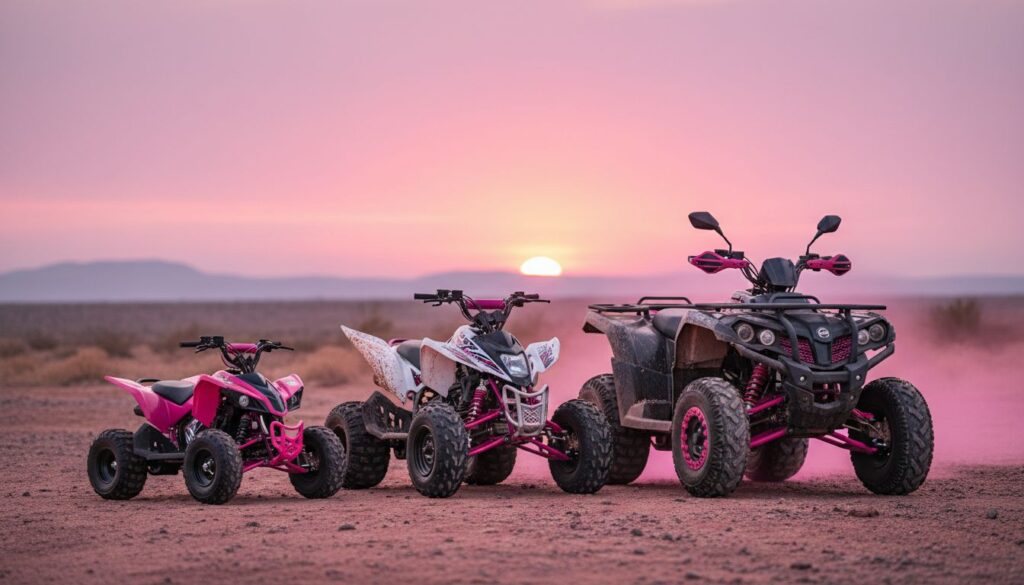
Buying an ATV gets much easier once you stop shopping by horsepower alone and start with the rider. An ATV, short for all-terrain vehicle, is a four-wheeled off-road machine with handlebars and a straddle seat, and people use it for trail riding, farm work, hunting, and general recreation. Terms like ATV, quad, and 4-wheeler are often used interchangeably, while a side-by-side is a different machine altogether. (powersports.honda.com)
The best ATV is the one the rider can control comfortably on the terrain they actually ride. If the machine feels too tall, too twitchy, or too powerful for the person sitting on it, the fit is wrong even if the spec sheet looks impressive.
What an ATV is and who it fits

ATVs are designed for off-highway use, and that matters more than a lot of first-time buyers realize. The ATV Safety Institute says to ride only on designated trails, never on paved roads except to cross safely where allowed, and to treat ATVs as real vehicles, not toys. Honda’s buyer’s guide also notes that ATVs are used for recreation, hunting, farming, construction, and other utility tasks. (atvsafety.org)
That is why the same category can cover a weekend trail bike, a youth learner machine, and a workhorse for property maintenance. If you are comparing models, the most important first question is not how big it looks. It is who will ride it, where it will go, and how much control that rider needs.
How to choose the right ATV by age and size
Age, size, and skill matter more than brand loyalty. Honda’s buyer’s guide says fit depends on age, riding experience, intended use, and body size, while ASI says parents should check the manufacturer’s minimum age label and remember that no single size works for every rider. CPSC also separates youth and transitional ATV classes by age. (powersports.honda.com)
- Child rider, roughly 6 to 9: only a youth ATV built and labeled for that age band, with adult supervision and training. ASI offers youth courses for riders age 6 and up, and some youth models are designed around speed control and small frames. (atvsafety.org)
- Child or early teen, roughly 10 to 13: a youth ATV in the 10-plus range. Honda describes youth ATVs as typically for riders 10 to 16, and CPSC’s Y-10 category is intended for children age 10 and older. (powersports.honda.com)
- Teen, roughly 14 to 15: a transitional model only if the manufacturer and local rules allow it. CPSC’s T category is intended for riders 14 and older under adult supervision or 16 and older. (cpsc.gov)
- New adult rider: an entry-level ATV under 250cc, ideally with light steering effort and simple controls. Honda says entry-level ATVs under 250cc are a strong fit for beginners and recommends starting smaller before moving up. (powersports.honda.com)
- Experienced adult or work rider: a 250 to 500cc machine for balance, or 500cc plus for harder terrain and heavier jobs. Honda says mid-size ATVs balance power and maneuverability, while full-size ATVs are designed for more demanding tasks and experienced riders. (powersports.honda.com)
The safest rule is that no single ATV size works for every rider.
Treat height as a comfort check. If the rider cannot reach the bars, operate the controls cleanly, and sit without feeling cramped or stretched, size down or look at a different class. The right ATV should feel predictable, not like a fight.
Compare cc, transmission, and drive before you buy

Displacement, transmission, and drivetrain work together. Honda’s guide recommends looking at engine size, suspension, transmission, and whether the machine has 4-wheel drive or electronic power steering instead of judging an ATV by cc alone. (powersports.honda.com)
What cc means in plain English
- Under 250cc: best for beginners and lighter recreational riding. Honda labels this entry-level range as a good starting point. (powersports.honda.com)
- 250 to 500cc: the middle ground for riders who want versatility. Honda describes this range as a balance of power and maneuverability. (powersports.honda.com)
- 500cc and up: for experienced riders, bigger loads, and tougher terrain. Honda says full-size ATVs in this class suit demanding work and aggressive trail riding. (powersports.honda.com)
Automatic, semi-auto, or manual
Transmission choice changes how relaxed or involved the ride feels. Honda’s lineup shows the range clearly, from fully automatic machines to electric shift and manual options, while youth models can use semi-automatic transmissions to make learning easier. (powersports.honda.com)
If the rider is brand new, automatic or easy-shift control usually makes the learning curve less intimidating. If the rider wants more involvement without jumping straight into a manual clutch, semi-auto or electric shift can be a smart middle step. Manual transmissions make sense when the rider wants maximum control and already has the confidence to manage it.
2WD vs 4WD
For drive type, do not buy the biggest label just to sound serious. Honda offers ATVs with both 2WD and 4WD, and other makers show the same pattern, with youth models often using 2WD and utility machines often adding selectable 4WD or lockable 4WD for extra traction. (powersports.honda.com)
Choose 2WD when you want a simpler, lighter-feeling machine for easier ground. Choose 4WD when the plan includes mud, hills, uneven terrain, towing, or serious property work. If you ride mostly on mild trails, 4WD is nice to have. If you regularly need traction, it becomes more than a luxury.
Gas vs electric
Electric ATVs are now a real option, not a novelty. Can-Am describes the Outlander Electric as delivering instant torque and zero noise, which makes electric worth considering if quiet operation and a simple ride feel matter to you. (can-am.brp.com)
If you are choosing between gas and electric, think about where the ATV will spend most of its time. Quiet riding, home-friendly use, and easy low-speed response push you toward electric. Longer, more traditional trail use and a broader range of model choices may still point you toward gas.
Safety gear and the first-ride checklist

Safety is not a side note, it is part of the purchase decision. ASI’s golden rules call for a DOT-compliant helmet, goggles, long sleeves, long pants, over-the-ankle boots, and gloves, plus no passengers on a single-rider ATV, no paved-road riding, age-appropriate machines, adult supervision for riders younger than 16, designated trails, and rider training. CDC’s safety guidance also says no child younger than 16 should operate or ride as a passenger on an ATV. (atvsafety.org)
Before the first ride, make the setup routine part of the plan:
- Read the owner’s manual before the first start.
- Confirm the throttle limiter, kill switch, and brakes work.
- Practice braking and low-speed turns in a clear open area.
- Check local trail rules and age restrictions.
- Buy a DOT-compliant helmet that fits before the ATV arrives.
- Schedule training if the rider is new.
- Start slow and build skills before moving onto rougher ground.
Honda also advises buyers to get to know the machine, read the owner’s manual, and gear up and get trained before heading out. (powersports.honda.com)
Common ATV buying mistakes to avoid
A lot of buyers make the same mistakes, and almost all of them are avoidable.
- Buying by cc only: engine size matters, but so do weight, fit, drivetrain, and control layout. (powersports.honda.com)
- Ignoring the age label: manufacturer minimum ages are there for a reason, and youth categories are not just smaller versions of adult machines. (atvsafety.org)
- Choosing manual because it sounds more capable: capable and beginner-friendly are not the same thing. If the rider is new, simple controls usually win. (powersports.honda.com)
- Forgetting passenger rules: ASI says never carry a passenger on a single-rider ATV, and never carry more than one on a two-person machine that is actually built for that use. (atvsafety.org)
- Skipping training and gear: a good helmet and a rider course are part of the purchase, not extras. (atvsafety.org)
- Ignoring terrain: a machine that works on flat, dry trails may feel wrong in mud, hills, or work sites. (powersports.honda.com)
FAQ
What is the best ATV for beginners?
The best ATV for beginners is usually a smaller, lighter machine that is easy to control. Honda’s guide recommends entry-level ATVs under 250cc for beginners, and says starting smaller before moving up is the smarter approach. (powersports.honda.com)
What size ATV should a 10-year-old get?
Start with a youth ATV that is specifically labeled for that age range. Honda says youth ATVs are typically for riders 10 to 16, and CPSC’s Y-10 category is intended for children age 10 and older. (powersports.honda.com)
Is 4WD necessary on an ATV?
Not always, but it is very useful when the riding gets tougher. Honda offers 2WD and 4WD options on some machines, and 4WD makes the most sense for mud, hills, uneven ground, and towing. (powersports.honda.com)
Are electric ATVs worth it?
They can be, especially if you care about quiet operation and instant response. Can-Am’s Outlander Electric highlights instant torque and zero noise, which makes electric appealing for some buyers. (can-am.brp.com)
Do I really need training and safety gear?
Yes. ASI says a helmet, goggles, gloves, boots, and a rider course are core parts of safe ATV use, and its training courses are available for youth, teens, adults, and supervisors. (atvsafety.org)
The easiest way to shop for an ATV is to decide the rider first, the terrain second, and the cc last. That order keeps you from overbuying a machine that looks exciting but is hard to control, and it usually leads to a better first season on the trail. (powersports.honda.com)
If you want a quick break from powersports research, you can also browse Scandinavia Holiday | Nordic Travel Guides & Local Experiences, find ideas in INSPIRATION – Scandinavia Holiday, or look through DESTINATIONS – Scandinavia Holiday.
Article created using Lovarank