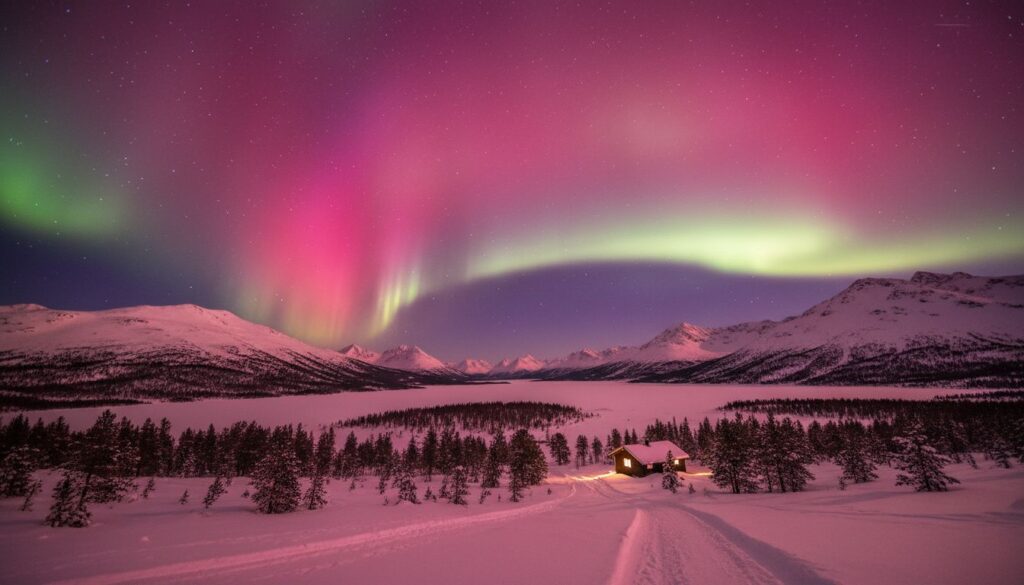
The northern lights can feel magical and unpredictable, but the best viewing trips usually follow a simple pattern. Go far enough north, stay away from city glow, and give yourself enough nights for the sky to cooperate. NASA and NOAA explain that auroras happen when charged particles from the Sun collide with Earth’s upper atmosphere, which is why latitude and darkness matter so much. For most travelers, the sweet spot is late August through early April, with the strongest viewing hours often falling around 10 p.m. to 2 a.m. local time. (science.nasa.gov)
If you are planning a real aurora chase, it helps to think beyond a simple list of destinations. The best places combine reliable skies, easy access to dark viewpoints, and enough winter infrastructure that you are not spending the whole trip fighting logistics. That is the logic behind this list of the top 10 best places to see the northern lights. (travelalaska.com)
Quick comparison: which destination fits your trip best?

If you want to narrow the top 10 best places to see the northern lights quickly, start with the trip style you want. This is the fastest way to match your expectations with the right destination, especially if you are comparing Norway, Sweden, and Finland on one itinerary. If you are building a broader Nordic trip, the destinations guide is a helpful place to compare winter bases before you book.
- Best overall odds for first-timers: Fairbanks, Alaska. It is one of the strongest aurora bases in the United States, with dedicated viewing lodges, tours, and clear advice on how long to stay. (travelalaska.com)
- Best big-city base with quick escapes: Tromsø, Norway. You can sleep in town, then head out to dark-sky viewpoints or guided camps in short order. (visitnorway.com)
- Best for reliable skies in Sweden: Abisko. Its mountain setting often stays clearer than surrounding areas, which is why it is so popular with aurora chasers. (visitsweden.com)
- Best for cozy Lapland stays: Rovaniemi and Saariselkä. Think glass igloos, campfires, and easy access to winter activities even if the aurora takes its time. (fcb.visitfinland.com)
- Best for a remote, dramatic trip: Svalbard or Ilulissat. Both feel otherworldly, with polar darkness, very dark skies, and memorable Arctic scenery. (en.visitsvalbard.com)
The top 10 best places to see the northern lights

1. Fairbanks, Alaska
Fairbanks is the classic starting point for a northern lights trip in the United States because it sits under the auroral oval. Travel Alaska recommends planning for three to five nights, and its guides point to Cleary Summit, Murphy Dome, Creamer’s Field, and Chena Hot Springs Resort as standout viewing spots. If you want a stay that is built around aurora watching, Borealis Basecamp near Fairbanks is designed for exactly that. (travelalaska.com)
Best for: first-timers, photographers, and travelers who want strong odds with solid winter infrastructure.
2. Tromsø, Norway
Tromsø works especially well if you want a real Arctic city with easy access to darker countryside. Visit Tromsø-region tours regularly head out of town for aurora hunting, and local experiences around the city include husky camps and hidden viewing spots about 30 minutes from the lights of town. The broader Tromsø area is one of Norway’s most practical bases for an aurora trip because you can pair urban comfort with quick nighttime escapes. (visitnorway.com)
Best for: travelers who want city amenities, guided tours, and flexible night plans.
3. Abisko, Sweden
Abisko has a reputation that is hard to beat. Visit Sweden says it is widely considered one of the best places in the world to see the northern lights because the surrounding mountains often help keep the sky clear even when nearby areas are cloudy. For a higher vantage point, the Aurora Sky Station on Mount Nuolja adds sweeping views, and Abisko sits about 100 kilometers west of Kiruna with shuttle access and accommodation nearby. (visitsweden.com)
Best for: travelers who want one of the most reliable aurora bases in Europe.
4. Rovaniemi, Finland
Rovaniemi is a smart choice if you want northern lights viewing with lots of comfort and easy trip planning. Visit Finland notes that the aurora season in Lapland starts in late August and runs into early April, and Rovaniemi stays appealing because you can book glass igloos, campfire outings, and family-friendly winter activities without sacrificing access to the sky. Even when the lights are shy, the setting feels like a proper Lapland getaway. (fcb.visitfinland.com)
Best for: families, couples, and travelers who want a cozy, accessible Lapland trip.
5. Saariselkä-Inari, Finland
If you want to go deeper into Lapland, Saariselkä-Inari is one of the strongest choices. Visit Finland describes Saariselkä as the northernmost holiday resort in the world, 260 kilometers north of the Arctic Circle, and says the wider northern Lapland region can deliver northern lights on roughly three out of five nights when the sky is clear. That is a serious advantage for travelers who can spend multiple nights in one place. (fcb.visitfinland.com)
Best for: travelers chasing longer odds, snowy adventure, and a more remote Lapland feel.
6. Iceland’s South Coast and Reykjanes
Iceland is one of the easiest places to combine aurora watching with dramatic scenery. Visit Iceland says the aurora season runs from late August until late April, that the lights are often most active around 11 p.m., and that clear, dark skies matter more than chasing a single number. Vík on the South Coast and the Reykjanes Peninsula both make sense as bases, especially if you want black-sand beaches, open horizons, and a short drive away from bright city light. (visiticeland.com)
Best for: travelers who want aurora viewing plus a classic Iceland road trip.
7. Alta, Norway
Alta is one of the most underrated aurora destinations in Norway. Visit Alta and Visit Norway both point to dark, open conditions away from city light pollution, and local operators offer everything from quick safaris to multi-night wilderness stays. The area around Gargia Lodge and Sorrisniva also makes the trip feel more immersive, with igloo hotel stays and guided outings from December through spring. (visitalta.no)
Best for: travelers who want a quieter Norway trip with strong winter scenery.
8. Churchill, Manitoba
Churchill is one of the most famous northern lights spots in Canada, and for good reason. The town says it is one of the top three places on the planet to see the aurora, and Travel Manitoba highlights Churchill as a standout destination for northern-lights viewing. It is also remote enough that getting there becomes part of the adventure, since travel is by air or train rather than by ordinary road access. (churchill.ca)
Best for: serious aurora seekers who want a true northern wilderness experience.
9. Svalbard, Norway
Svalbard is about as far north as most travelers will ever go for aurora watching, and that is exactly why it belongs on this list. Visit Svalbard says the season starts in October and ends in March, with polar night from November onward, which means the lights can be visible even during the day. Local tours regularly leave Longyearbyen and head into the valleys or away from settlement light pollution to find the best sky. (en.visitsvalbard.com)
Best for: adventurous travelers, photographers, and anyone who wants a truly Arctic setting.
10. Ilulissat, Greenland
Ilulissat gives you a northern lights trip with a backdrop that feels almost surreal. Visit Greenland says you can see the northern lights there from September to April, and local hotels and tour operators point to the icefjord, winter darkness, and low light pollution as major advantages. Add dog sledding, icebergs, and the possibility of seeing the lights from a hotel room or viewpoint, and Ilulissat becomes much more than a one-note aurora stop. (visitgreenland.com)
Best for: travelers who want scenery first and aurora viewing as the bonus.
Best time to go, month by month

The best month for aurora hunting depends on how you balance darkness, weather, and comfort. NOAA notes that auroras are often strongest around the equinoxes, while many tourism boards in Iceland, Sweden, Finland, and Alaska show long seasons that run from late summer into early spring. That means your best travel window is often broader than people think. (swpc.noaa.gov)
- September and October: Great if you want dark enough skies without the harshest winter temperatures. This is also when equinox-related activity can be strong. (swpc.noaa.gov)
- November and December: Excellent for darkness, especially in polar destinations like Svalbard, Fairbanks, and Lapland. The tradeoff is colder weather and a higher chance of winter travel complications. (en.visitsvalbard.com)
- January and February: Often the sweet spot for deep winter trips, especially in Abisko, Churchill, and northern Finland, where long nights and full winter scenery line up nicely. (visitsweden.com)
- March: Still excellent in many northern destinations, and NOAA’s equinox guidance makes this one of the stronger months for activity. (swpc.noaa.gov)
- April: Still possible in the far north, but the season fades quickly as nights get shorter. (visitfinland.com)
How to improve your odds of actually seeing them
The single best way to increase your chances is to stay longer and stay flexible. Travel Alaska says three to five nights is ideal for Fairbanks, and NOAA’s guidance makes it clear that you need dark skies, clear weather, and a strong forecast window. Visit Iceland also points out that the Kp index alone is not enough, so it pays to check cloud cover and real-time space weather before you head out. If you are still comparing Scandinavian bases, the Nordic travel inspiration page can help you build a trip around the season you want. (travelalaska.com)
A simple aurora checklist looks like this:
- stay at least three nights, and longer if you are traveling far for the trip
- leave city lights behind and aim for wide, open horizons
- check cloud cover first, then aurora activity
- use NOAA’s aurora forecast and local weather tools together
- book a lodge, cabin, or tour that lets you move quickly when the sky clears (swpc.noaa.gov)
What to pack for a comfortable night outside
Aurora trips are worth doing right, because standing still in the cold for two hours is very different from taking a quick winter walk. Alaska, Iceland, Norway, and Finland all emphasize dressing warmly, and several of their aurora experiences include thermal gear, hot drinks, or heated shelters for that reason. A little preparation goes a long way. (swpc.noaa.gov)
Bring these essentials:
- insulated boots and wool socks
- layered base, mid, and outer shells
- gloves, a warm hat, and hand warmers
- a headlamp with a red-light mode
- a tripod and spare camera battery if you plan to photograph the sky
- a thermos with something hot to drink
FAQ
Is the northern lights season the same everywhere?
No. Most aurora destinations share a broad season from late summer or early autumn through early spring, but exact dates vary by location. Iceland, Sweden, Finland, Alaska, and Svalbard all publish slightly different seasonal windows based on darkness and local conditions. (visiticeland.com)
Do I need a guided tour?
Not always, but a guide can be very helpful if you do not know the area or want someone else to handle weather calls. Many destinations on this list, including Alaska, Tromsø, Sweden, Finland, and Svalbard, actively promote guided aurora outings for that reason. (travelalaska.com)
What if the aurora does not appear?
Pick a destination with strong backup plans. Hot springs, dog sledding, ice hotels, saunas, museums, and scenic winter drives can make the trip worthwhile even on a quiet sky night. That is one reason places like Rovaniemi, Svalbard, Iceland, Fairbanks, and Ilulissat are such dependable choices for a full winter escape. (visitfinland.com)
The best aurora trip is the one that matches your style, not just the one with the biggest reputation. If you want the strongest practical odds, start with Fairbanks, Abisko, Tromsø, or Churchill. If you want the most atmospheric winter experience, look at Iceland, Svalbard, or Greenland. And if you want help shaping a broader Nordic trip around the season, start with Scandinavia Holiday and build outward from there. (travelalaska.com)
Article created using Lovarank