If you're trying to pin down nordic countries meaning, the shortest answer is this: it usually refers to Denmark, Finland, Iceland, Norway, and Sweden, plus the Faroe Islands, Greenland, and Åland in official Nordic co-operation. The phrase is broader than Scandinavia, and it describes a region that shares history, institutions, language links, and a habit of cooperating across borders. (norden.org)
That makes the term useful in more than one setting. Travelers use it to plan multi-country trips, policymakers use it to talk about cross-border rules, and writers use it to describe a shared cultural space that is not quite the same thing as a single nation or a single peninsula. (norden.org)
What Nordic countries meaning actually refers to
In plain English, the Nordic countries are the five sovereign states at the core of the region. Official Nordic co-operation also includes three autonomous territories, which is why some sources describe the Nordic Region more broadly than everyday speech does. The term is commonly linked to Norden, the northern regional grouping used for the area as a whole. (britannica.com)
A simple way to remember it is this:
- Nordic is the broad regional label. (norden.org)
- Scandinavia is the narrower subregion. (britannica.com)
- Official Nordic co-operation includes more than just the five main countries. (norden.org)
Which countries are Nordic?

In everyday use, the Nordic countries are Denmark, Finland, Iceland, Norway, and Sweden. In official Nordic cooperation, the Faroe Islands, Greenland, and Åland are also part of the region, even though they are not sovereign states. (norden.org)
That is why a clear travel or culture guide needs to separate the core countries from the wider region. If you're planning a route and want a practical overview of where these places fit, our Nordic travel destinations guide is a useful starting point.
The five sovereign Nordic countries
- Denmark
- Finland
- Iceland
- Norway
- Sweden (norden.org)
The autonomous territories included in the Nordic Region
- Faroe Islands
- Greenland
- Åland (norden.org)
Nordic vs Scandinavia

This is where most confusion starts. Scandinavia usually means Denmark, Norway, and Sweden. Nordic is the wider umbrella, so it includes Finland and Iceland as well as the autonomous territories tied to Denmark and Finland. Some writers use Scandinavia more loosely, but the standard distinction is still the narrower one. (britannica.com)
| Term | Usually includes | Easy way to think about it |
|---|---|---|
| Nordic countries | Denmark, Finland, Iceland, Norway, Sweden, plus the Faroe Islands, Greenland, and Åland in official co-operation | The broader regional label |
| Scandinavia | Denmark, Norway, Sweden | The narrower core region |
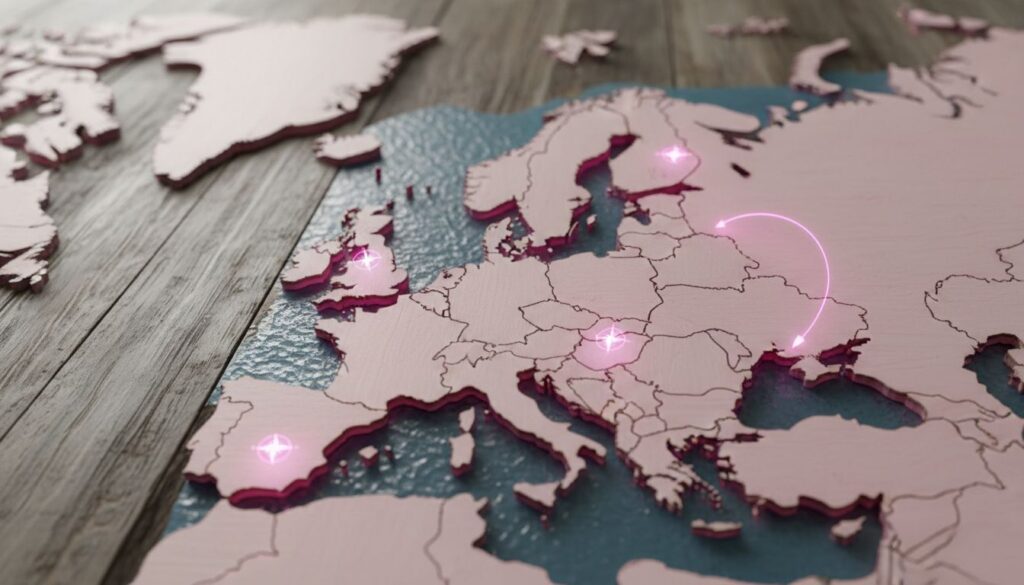
| Northern Europe | A broader geographic area | The Nordics sit within it |
This distinction is the main reason Finland is Nordic but not usually Scandinavian, and Iceland is Nordic even though it is not part of the Scandinavian Peninsula. (britannica.com)
For readers planning a trip, that difference matters because a Scandinavian itinerary may not include every Nordic destination. If you are comparing routes and regions, our Nordic travel inspiration page can help spark ideas.
How the term became a regional identity
The idea of a Nordic region is not just a modern branding trick. Official Nordic co-operation is described as the world's oldest regional partnership, and its main forums are the Nordic Council and the Nordic Council of Ministers. The Nordic Council was established in 1952, and the Helsinki Treaty, signed in 1962, set the legal framework for co-operation. (norden.org)
That framework matters because it turned shared history into practical institutions. The Nordic Council handles inter-parliamentary co-operation, while the Nordic Council of Ministers handles intergovernmental work. Together they keep issues like mobility, labour rules, culture, and regional policy on the agenda. (norden.org)
Why the distinction matters in real life

Nordic does real work in everyday life. The region has long aimed to make it easier for people to move, commute, study, and do business across borders, and the Nordic governments maintain tools that track and reduce barriers to freedom of movement. The old Nordic passport union was one early sign of that idea in action. (norden.org)
It also matters economically. Nordic co-operation on labour is built around a shared labour market, and official sources describe the Nordic model as combining a large public sector, welfare benefits, social safety nets, and relatively high taxes that fund public services. That is why people often talk about the Nordics as a distinct policy region, not just a cluster of neighboring states. (norden.org)
If you want to see how these connections show up in a traveler-friendly format, our about page explains how we think about Nordic travel content and regional context.
Languages and culture across the region
Language is one of the clearest reminders that the Nordics are connected without being identical. Danish, Norwegian, and Swedish are closely related North Germanic languages and are especially mutually intelligible in writing. Faroese and Icelandic are also related, but they are not mutually intelligible with the mainland Scandinavian languages, and Finnish belongs to a different language family altogether. Sámi languages are spoken across parts of northern Norway, Sweden, and Finland. (britannica.com)
Culture works the same way. The region shares a lot of social history, public institutions, and cultural exchange, but each country still has its own traditions, symbols, and national story. That mix of similarity and difference is part of why Nordic culture is so recognizable, from design and literature to music and public life. (norden.org)
If you enjoy planning around culture as much as geography, our Nordic travel inspiration page offers more ideas for the region.
Common misconceptions about Nordic countries meaning
A few quick rules can save a lot of confusion:
- Is Finland Scandinavian? Usually no. Finland is Nordic, but standard usage reserves Scandinavia for Denmark, Norway, and Sweden. (britannica.com)
- Is Iceland Scandinavian? Usually no. Iceland is Nordic, but it is not usually counted as part of Scandinavia. (britannica.com)
- Are the Faroe Islands, Greenland, and Åland countries? Not sovereign countries, but autonomous territories or regions included in official Nordic co-operation. (norden.org)
- Is Nordic the same as Northern Europe? No. Northern Europe is broader, while Nordic is the specific regional grouping used for the five countries and their related territories. (britannica.com)
The quick answer to remember
If you only remember one sentence, make it this: the nordic countries meaning is the five sovereign states of Denmark, Finland, Iceland, Norway, and Sweden, plus the Faroe Islands, Greenland, and Åland in official Nordic co-operation. Scandinavia is narrower, so it does not cover the full Nordic picture. (norden.org)
Frequently asked questions
What does Nordic countries mean?
It is the standard umbrella term for the region centered on Denmark, Finland, Iceland, Norway, and Sweden, with the Faroe Islands, Greenland, and Åland included in official Nordic co-operation. (norden.org)
Which countries are Nordic?
The five sovereign Nordic countries are Denmark, Finland, Iceland, Norway, and Sweden. If you are using the official regional definition, add the Faroe Islands, Greenland, and Åland. (norden.org)
What is the difference between Nordic and Scandinavian?
Scandinavia usually means Denmark, Norway, and Sweden. Nordic is the broader term, and it includes Finland and Iceland as well as the autonomous territories associated with Denmark and Finland. (britannica.com)
Why do people use the word Nordic?
Because it is more precise when the discussion includes Finland, Iceland, or the wider regional co-operation structure. It is the better word whenever you want to talk about the whole network of countries and territories rather than the narrower Scandinavian core. (norden.org)
The result is a small vocabulary choice with a big payoff. Use Nordic when you want the broader region, use Scandinavia when you mean the narrower core, and you will avoid most common mix-ups. If you want to keep exploring the area from a trip-planning angle, our destinations page is a useful next stop.
Article created using Lovarank