There are five Nordic countries: Denmark, Finland, Iceland, Norway, and Sweden. If you also include the Faroe Islands, Greenland, and Åland, the broader Nordic region is often counted as eight entities. That is the simple reason the answer to how many Nordic countries are there can vary depending on who is asking and what definition they are using.
If you are planning a trip and want to turn that geography into real places to visit, our Nordic travel guides and local experiences can help you keep exploring.
The short answer

The short answer is 5 Nordic countries.
Those five are the sovereign states most people mean when they ask the question in a precise way:
- Denmark
- Finland
- Iceland
- Norway
- Sweden
Each of these is an independent country with its own government, capital, and international identity. That is why 5 is the cleanest answer when the question is specifically about countries.
If you are looking for places to put on a map, our Nordic destinations page is a practical next stop.
Which countries are Nordic?
Here is a simple reference table that shows the five Nordic countries at a glance.
| Country | Capital | Status | Why it counts |
|---|---|---|---|
| Denmark | Copenhagen | Sovereign state | One of the core Nordic countries and part of Scandinavia |
| Finland | Helsinki | Sovereign state | Nordic country, often confused with Scandinavia, but fully part of the Nordics |
| Iceland | Reykjavík | Sovereign state | Nordic country in the North Atlantic |
| Norway | Oslo | Sovereign state | One of the core Nordic countries and part of Scandinavia |
| Sweden | Stockholm | Sovereign state | One of the core Nordic countries and part of Scandinavia |
The table above is the best answer if someone asks the question in a school, travel, or general knowledge context. It avoids the most common source of confusion, which is mixing sovereign countries with territories that are often grouped into the wider Nordic world.
Nordic countries vs Scandinavia

This is where many people get tripped up. Scandinavia and the Nordics are related, but they are not exactly the same thing.
In the strictest usage, Scandinavia refers to:
- Denmark
- Norway
- Sweden
The Nordic countries include those three plus:
- Finland
- Iceland
So if someone says “Scandinavia” when they really mean the whole Nordic region, they are using the word loosely. That is common in everyday conversation, but it is not the most precise definition.
A simple way to remember it is this:
- Scandinavia is the smaller, narrower term
- Nordic countries is the broader, more accurate term for the five sovereign states
This distinction matters because Finland and Iceland are absolutely Nordic, even though they are not part of Scandinavia in the narrow sense.
Why some lists say 8 instead of 5

The number rises from five to eight when people start counting the self-governing territories that are often included in broader Nordic discussions:
- Faroe Islands, a self-governing archipelago within the Kingdom of Denmark
- Greenland, an autonomous territory within the Kingdom of Denmark
- Åland, an autonomous, Swedish-speaking region of Finland
These are not sovereign countries, so they should not replace the answer of 5. But they do appear in many discussions about the Nordic region because they are culturally, politically, and geographically tied to Nordic cooperation.
That is why you may see two different answers in different contexts:
- 5, when the question means Nordic countries
- 8, when the question includes the broader Nordic family of countries plus territories
In other words, the count changes because people are using different levels of precision, not because the geography itself is unclear.
What makes a place Nordic?
The Nordic region is more than a list of names. It is a shared regional identity shaped by geography, history, and cooperation.
A place is usually considered Nordic because of one or more of these factors:
- Geography: It sits in Northern Europe, the North Atlantic, or the nearby Arctic zone
- History: The region shares old political links, trade routes, and long periods of overlap
- Cooperation: Nordic institutions bring the countries and territories together in practical ways
- Culture: There are shared values, similar social systems, and related cultural traditions
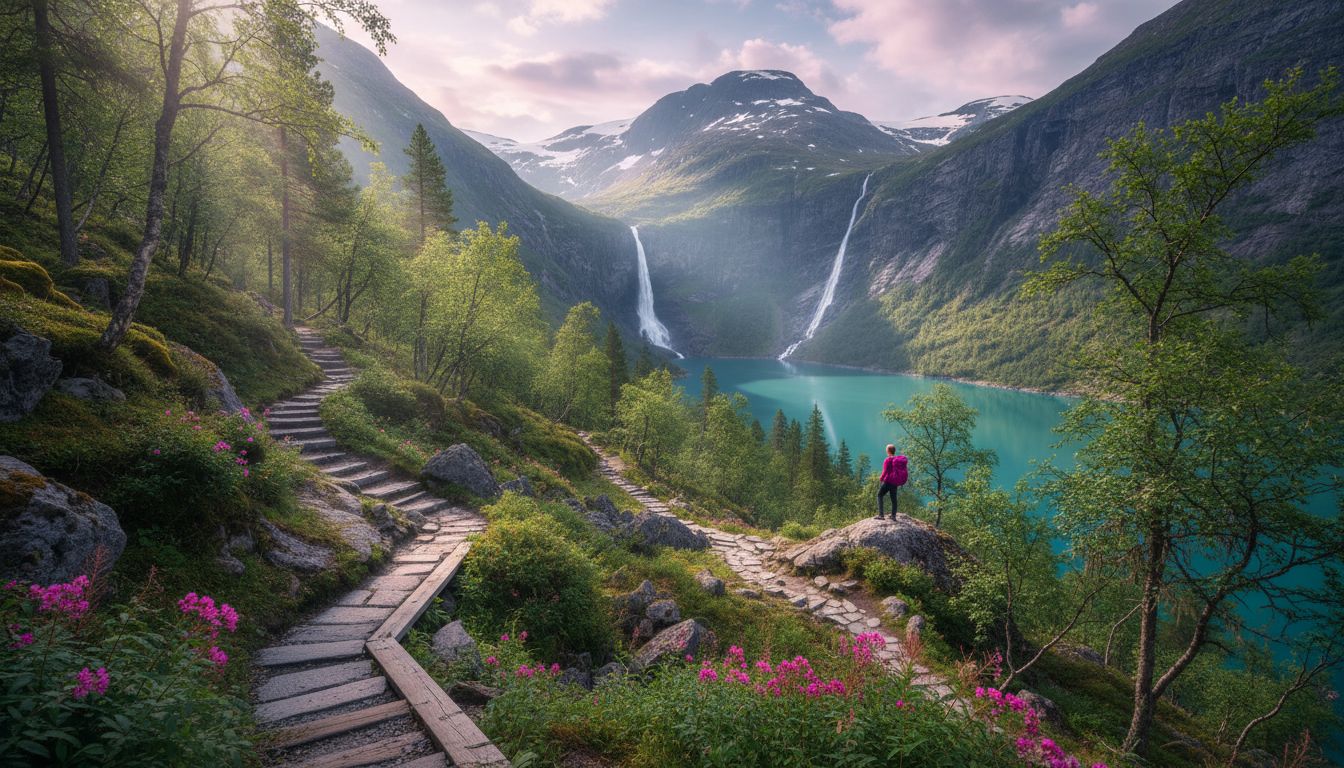
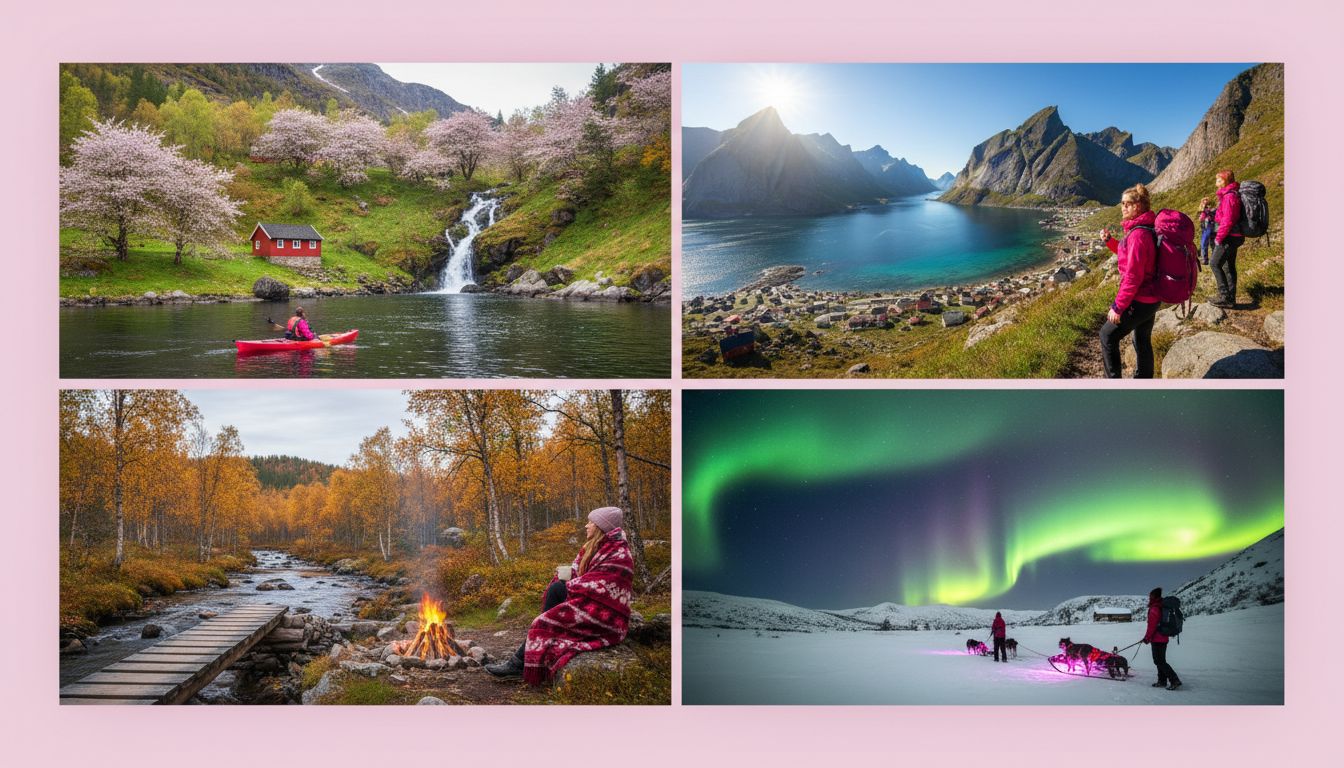
The region is also visually diverse. You get fjords, forests, volcanic landscapes, islands, long coastlines, and Arctic environments, all under one regional umbrella. That diversity is part of what makes the Nordics so recognizable even though each country has its own identity.
For trip ideas that reflect that variety, browse our travel inspiration for the Nordics.
A simple way to remember the count
If you want a quick memory trick, use this formula:
- 5 sovereign Nordic countries
- 3 often-included territories
- 1 broader Nordic region
That is usually enough to answer the question correctly in most conversations.
Another easy shortcut is to think in terms of countries versus region. If someone wants the number of countries, the answer is 5. If someone wants the full Nordic family, the answer can expand to 8.
Why the distinction matters
This may seem like a small language issue, but it matters more than people think.
For travelers, the right term helps you find the right guides, maps, and itineraries. A search for Scandinavia may miss Finland and Iceland, while a search for the Nordics will usually give you a wider view of the region.
For students, writers, and researchers, the difference prevents errors. Calling Greenland a country, for example, would be incorrect. So would leaving Finland out of the Nordics just because it is not part of Scandinavia in the narrow sense.
For general readers, the distinction makes the region easier to understand. The Nordics are not one country and not one political block. They are a connected group of five sovereign states, plus several self-governing territories that are often included in broader regional conversations.
The Nordic Council and other forms of cooperation reinforce that sense of regional connection. That is part of why the Nordics feel cohesive, even though they include mainland states, islands, and Arctic territories.
Frequently asked questions
Is Finland a Nordic country?
Yes. Finland is one of the five Nordic countries. It is sometimes confused with Scandinavia, but it is definitely part of the Nordic region.
Is Iceland part of Scandinavia?
Usually, no. Iceland is Nordic, but in the strict sense it is not Scandinavian. People sometimes use Scandinavia more loosely, which is where the confusion comes from.
Is Greenland a Nordic country?
No. Greenland is not a country. It is an autonomous territory within the Kingdom of Denmark, and it is often included in broader Nordic discussions.
Is Denmark Nordic?
Yes. Denmark is one of the five Nordic countries, and it is also part of Scandinavia.
Is Åland a Nordic country?
No. Åland is an autonomous region of Finland, not a sovereign country. It is still often grouped into the broader Nordic family.
Are the Faroe Islands a country?
No. The Faroe Islands are self-governing within the Kingdom of Denmark. They are not an independent country, but they are commonly included in broader Nordic counts.
The bottom line
So, how many Nordic countries are there? The most accurate short answer is five. Those countries are Denmark, Finland, Iceland, Norway, and Sweden.
If you include the Faroe Islands, Greenland, and Åland, the wider Nordic region is often counted as eight entities. That is why you will sometimes see both numbers in different sources.
Once you know the difference between countries, territories, and the broader Nordic region, the term becomes much easier to use correctly.
Article created using Lovarank