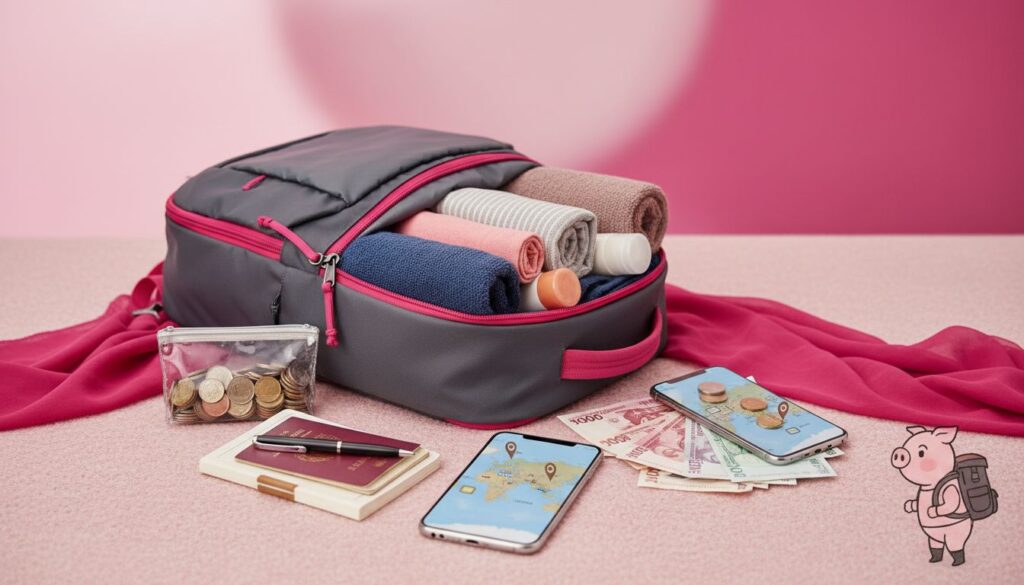
Travel doesn't have to cost a fortune. Whether you want a weekend escape or a month on the road, this guide shows exactly how to travel on a budget without feeling deprived. You will get practical tactics for finding cheap flights, saving on accommodation, trimming daily expenses, and protecting yourself with the right financial tools and insurance. Plus, I include real sample budgets for 7, 14, and 30 days across regions, a packing list that saves money, and a step-by-step action plan to make your next trip affordable.
Flights: Find the cheapest tickets first

Flights are the biggest line item for many trips, and the fastest place to cut costs. Here are battle-tested strategies.
Best search tools and how to use them
- Use multiple search engines: Google Flights and Skyscanner for broad searches, Kayak for flexible date grids, and Momondo for alternate routing ideas. Set up alerts on Hopper and Skyscanner for price drops.
- Search incognito or clear cookies before big-ticket searches. Some tools personalize results and you want a clean baseline.
- Use the map view on Google Flights or Skyscanner to find the cheapest nearby destinations during your available dates.
Flexible dates and the positioning flight trick
- Being flexible by a day or two often saves hundreds. Search +/- 3 days or use whole-month view.
- Consider positioning flights: fly into a major hub that’s often cheaper and take a low-cost regional carrier to your final stop. The "Greek Islands trick" is a good example—fly cheap into Athens and hop a budget carrier to an island.
Budget airlines and what to watch for
- Budget carriers (Ryanair, Wizz, easyJet, Spirit, Southwest’s basic fares regionally, AirAsia) can be cheap but add fees for seat selection, baggage, and payment methods.
- Travel carry-on only when possible. Pack a compact carry-on that meets the strictest low-cost airline dimensions to avoid surprise fees.
Track mistake fares and deals
- Subscribe to Scott's Cheap Flights, HolidayPirates, and FareAlarm lists for mistake fares and flash sales. When you see an exceptional deal, book fast—mistake fares can disappear.
When to book
- Short international: 2–4 months out often hits good fares. Long-haul bargain: sometimes 6–9 months out. For peak season, book early.
- For last-minute flexibility, use flight trackers and be prepared to act quickly if a fare drops.
Accommodation: Sleep cheaper without losing comfort

Accommodation is the second-largest expense. Mix and match options depending on the trip length and desired comfort.
Hostels, guesthouses, and private rooms
- Hostels are ideal for solo or budget travelers. Many offer private rooms at lower cost than hotels and still provide kitchen access and social opportunities.
- Use Hostelworld and Booking.com filters for kitchen access, free cancellation, and reviews.
Short-term rentals and alternatives
- Airbnb can be cheaper for groups or longer stays. Negotiate for weekly discounts and message hosts about longer-stay rates.
- Consider house-sitting, work exchanges (Workaway, WWOOF), or Couchsurfing for substantial savings.
Timing your booking
- Book refundable or adjustable options until two weeks before arrival. If prices drop, rebook and cancel the original where allowed.
- For long stays, negotiate directly with hosts for a better rate than the platform price.
Destination selection and timing
Choosing where and when you travel is one of the easiest ways to control cost.
Pick budget-friendly regions
- Low-cost regions include Southeast Asia (Thailand, Vietnam, Cambodia), parts of Latin America (Mexico, Guatemala, Bolivia), and Eastern Europe (Romania, Bulgaria, Poland).
- If you want scenic but affordable, consider shoulder seasons when weather is still good but prices fall.
Off-season and shoulder season benefits
-
Shoulder season equals lower prices, fewer crowds, and better availability. You might trade a few degrees in temperature for big savings.
-
Check local events and holidays—sometimes off-season has local festivals that boost prices unexpectedly.
-
For destination ideas and seasonal inspiration, see Inspiration from Scandinavia Holiday.
Daily expenses: Food, transport, and activities
Small daily changes add up to big savings.
Food and eating smart
- Eat like a local: street food and market meals are cheaper and often tastier than tourist restaurants.
- Have one nicer meal rather than three pricey ones. Use grocery stores and picnics to cut food costs.
Local transport hacks
- Skip taxis where possible. Use public transport, shared rides, bikes, or walk. Buy multi-day transit cards if available.
- Use apps like Rome2rio to compare transport modes and prices.
Activities on a budget
- Hunt free walking tours (tip the guide), city tourist cards only if they match your planned visits, and explore nature-based activities like hikes that cost little or nothing.
- For paid attractions, search for combined tickets, student discounts, or free entry days.
Financial tools: Cards, banking, and money safety
Good financial tools stop needless fees and protect your budget.
Cards and accounts to use
- Use a no-foreign-transaction-fee card for purchases. Examples include travel cards like those from Chase, Capital One, or regional equivalents depending on your home country.
- Use a fee-free ATM/reimbursement account like Charles Schwab for US travelers or Wise for cheap currency conversion.
Cash, wallets, and splitting costs
- Carry a small amount of local cash for markets and transport. Use apps like Splitwise to split shared costs with travel companions.
- Track spending in a budget app such as Trail Wallet, TravelSpend, or a simple spreadsheet.
Packing: Save money by packing smart

Good packing can eliminate baggage fees and prevent impulse purchases abroad.
Items that save money
- Quick-dry clothing, a lightweight towel, and a universal adapter reduce need for replacements.
- A reusable water bottle and a compact daypack keep daily costs down.
- Bring basic toiletries to avoid buying travel-size items at a markup.
Packing list to avoid checked luggage
- One carry-on backpack, one personal item, packing cubes, a single pair of comfortable shoes, a lightweight jacket, and versatile clothing pieces you can layer.
Earning while you travel: offset costs with work
If you plan longer travel, earning while abroad can be a game-changer.
Remote work and freelancing
- Freelance writing, design, teaching English online, and remote customer support are common ways to earn. Platforms like Upwork, Fiverr, and Remote.co list gigs.
- Make sure your visa allows work. Some digital nomad visas explicitly permit remote work.
Working holiday and seasonal visas
- Check working holiday schemes (Australia, New Zealand, Canada, Japan) for opportunities to legally work short-term while traveling.
- House-sitting and work-exchange programs reduce or remove accommodation costs.
Travel insurance and visas: protect your budget
Insurance and visa fees are unavoidable but critical to avoid catastrophic loss.
Travel insurance that fits a budget
- Choose a policy that covers medical emergencies and trip interruption. Providers like World Nomads and SafetyWing offer flexible plans for long-term travelers.
- For longer trips, consider annual multi-trip policies—they can be cheaper if you travel often.
Visa strategies
- Research visa fees before planning. Some countries offer visa-free access, others require paid visas or e-visas.
- Apply early and check for multi-entry options if you plan to leave and return.
Sustainable and ethical budget travel
Saving money and traveling responsibly can go hand in hand.
- Choose local tour operators, eat locally produced food, and respect community rules. Buying local helps the places you visit and often costs less.
- Reduce flights when possible by taking slower transport—overnight trains or buses save both time and accommodation costs.
Common budget travel mistakes and how to avoid them
- Overbook activities and lose flexibility. Keep at least one free day per week.
- Not checking visa rules and paying emergency fees. Research before you go.
- Skimping on travel insurance and losing significant money on medical bills or cancellations.
Budget breakdowns: sample daily costs and tiers
Below are realistic per-person budgets in USD for three budget tiers. These examples assume sensible choices (no luxury splurges) and vary by region.
Tier definitions:
- Bronze: shoestring backpacker, shared dorms, street food.
- Silver: private budget rooms, mix of street food and cafes.
- Gold: comfortable budget—private apartments, occasional dining out.
7-day sample (Southeast Asia)
- Bronze: $20/day = $140 total (dorm $8, food $6, transport $2, activities $3, incidentals $1)
- Silver: $45/day = $315 total (private room $20, food $12, transport $4, activities $7, misc $2)
- Gold: $90/day = $630 total (apartment $40, food $25, transport $8, activities $12, misc $5)
14-day sample (Eastern Europe)
- Bronze: $35/day = $490 (dorms $12, food $12, transport $5, activities $5, misc $1)
- Silver: $70/day = $980 (private $30, food $20, transport $8, activities $10, misc $2)
- Gold: $140/day = $1960 (apartment $60, food $45, transport $15, activities $15, misc $5)
30-day sample (Latin America)
- Bronze: $30/day = $900 (dorm $10, food $10, transport $5, activities $4, misc $1)
- Silver: $60/day = $1800 (private $25, food $20, transport $8, activities $5, misc $2)
- Gold: $120/day = $3600 (apartment $50, food $40, transport $15, activities $10, misc $5)
Use these as starting points and adjust for the city. For more destination options, check Destinations at Scandinavia Holiday.
Action plan: 8-week timeline to a budget trip
Week 8: Set your budget and pick a flexible date range.
Week 7: Search flights and sign up for deal alerts.
Week 6: Decide on destination and accommodation type.
Week 5: Book flights if the price hits your target; reserve refundable lodging.
Week 4: Apply for visas and buy travel insurance.
Week 3: Finalize packing list and sort finances (cards, cash, apps).
Week 2: Pre-download offline maps and translations; confirm bookings.
Week 1: Recheck prices; rebook if a better deal appears; prepare home logistics.
If you are leaving sooner than eight weeks, prioritize flights and insurance first.
Tools and apps to save time and money
- Flights: Google Flights, Skyscanner, Hopper, Kayak.
- Accommodation: Hostelworld, Booking.com, Airbnb.
- Money: Wise, Revolut, Charles Schwab (US), XE currency app.
- Budget tracking: Trail Wallet, TravelSpend, Splitwise.
- Offline help: Google Maps offline, Google Translate offline, Maps.me.
FAQs
Q: Can I realistically travel for $20 a day?
A: In parts of Southeast Asia and some Latin American countries, a disciplined traveler can average $20/day, but comfort will be limited and cities vary widely.
Q: Is travel insurance worth it for budget trips?
A: Yes. A single medical emergency or a canceled flight can cost more than you saved on budget hacks.
Q: How do I avoid foreign transaction fees?
A: Use cards with no foreign transaction fees and withdraw cash from fee-friendly ATMs or accounts that reimburse fees.
Final thoughts
Learning how to travel on a budget is more about choices and priorities than deprivation. Small changes—flexible dates, smarter packing, local eating, and the right cards—compound into real savings. Pick a budget tier that matches how you want to travel, use the sample budgets above as templates, and follow the action plan to turn your travel dreams into an affordable reality.
For planning inspiration or help choosing a regional itinerary, the Scandinavia Holiday about page offers background on crafting thoughtful, budget-aware trips.
Safe travels and smart spending—your next affordable adventure is closer than you think.
Article created using Lovarank