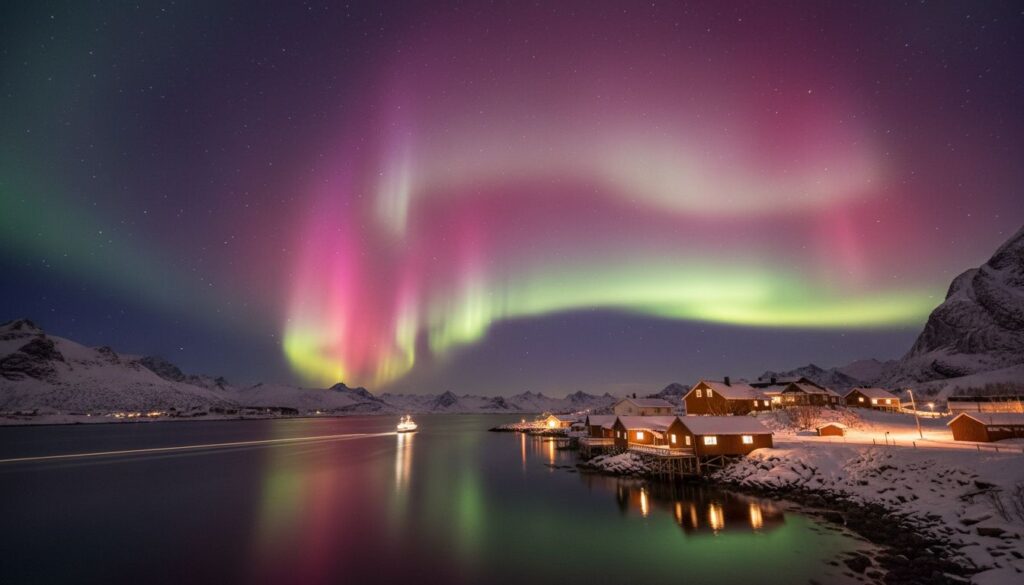
The best time to see aurora in Norway is during the dark season, with the strongest all-around window running from late September to late March. If you want the best balance of darkness, access, and memorable winter scenery, December through March is especially reliable, while September, October, and March often give you the sweet spot of good aurora chances with a little more comfort and flexibility. Norway is one of the world’s most rewarding places to chase the Northern Lights, but timing your trip well makes a huge difference.
When is the best time to see the aurora in Norway?

If you want the shortest possible answer, plan for late September to late March. That is the core aurora season across northern Norway, when the nights are dark enough for the lights to appear. In practical terms, the best time to see aurora in Norway is usually when you have three things working in your favor at once: darkness, clear skies, and enough time on the ground to wait for a good night.
A lot of travelers assume the coldest months are automatically best. They are not. Cold weather can help because it often comes with clearer air, but the real key is darkness and cloud cover. A freezing night with thick cloud is worse than a milder night with open sky.
If you are choosing between seasons, think like this:
- Best overall window: late September to late March
- Best balance of darkness and winter scenery: December to March
- Best shoulder seasons: September, October, and March
- Not worth planning around: summer, when the midnight sun or bright twilight makes aurora viewing impossible in most of Norway
If aurora is the main goal of your trip, do not build your plan around one single night. Build it around several nights.
What time of night is best for Northern Lights watching?
The season matters most, but the time of night still helps. In northern Norway, the most common viewing window is usually from early evening to around 2 a.m., with many travelers having the best luck between 8 p.m. and midnight. Local guides in Tromsø often point to 18:00 to 02:00 as the prime range, especially in the darker months.
That said, aurora can appear outside the most popular hours. Space weather does not run on a tourist schedule. A strong display can flare up earlier in the evening or later in the night if the sky is dark enough. That is why a flexible plan matters more than obsessing over a perfect clock time.
A useful rule is simple: go out when it is dark, stay out when the sky is clear, and be patient. If clouds move in, be ready to shift location rather than give up on the night.
Month-by-month guide to seeing aurora in Norway

This is where timing gets more practical. Different months offer different trade-offs, so the best month depends on whether you care most about darkness, weather, crowds, snow, or travel comfort.
| Month | What to expect | Why it matters |
|---|---|---|
| September | Darker nights return, weather is milder, autumn colors are still visible | Great shoulder month with good aurora potential and easier travel |
| October | Longer nights, fewer crowds, cooler temperatures | One of the best compromise months for a first trip |
| November | Very dark, colder, often more unsettled weather | Strong aurora window, but you need flexibility |
| December | Deep winter, long nights, holiday atmosphere, snow in many areas | Excellent darkness, but prices and crowds can rise |
| January | Extremely dark in the north, crisp winter scenery | Good for dedicated aurora trips and Arctic activities |
| February | Still dark, snowy landscapes, slightly more daylight | Often a very strong month for travelers who want winter beauty |
| March | High aurora activity potential, longer days, more comfortable travel | One of the most balanced months overall |
| April | Early April can still work, but darkness fades quickly | Good only at the very start of the month |
September
September is one of the smartest months for travelers who want a softer landing into the aurora season. The nights are dark enough, the weather is usually less brutal than midwinter, and you can still enjoy hiking, fjords, and scenic drives without full winter conditions. If you want Northern Lights without the deepest cold, September is a strong choice.
October
October is often underrated. The nights are long, the landscape starts to feel properly Arctic, and the crowds are usually smaller than in peak winter. You may get a mix of calm clear nights and stormy weather, so this is a month where flexibility really pays off. If you can stay several nights and move around, October can be excellent.
November
November is fully into dark-season territory, which is good for aurora, but weather can be more challenging. Think clouds, snow, and occasional wind rather than postcard-perfect stillness. The advantage is that the nights are long and the daylight is limited, so you have a big viewing window. If you are comfortable chasing conditions, November can deliver.
December
December is one of the darkest months, especially north of the Arctic Circle. That makes it a very good month for Northern Lights hunting. It is also the most festive time of year, with holiday markets, winter meals, and beautiful snowy scenery. The downside is that it is a busy travel period, so book early if you want good accommodation or guided tours.
January
January is a classic aurora month in Norway. The nights are long, the landscapes are deeply wintry, and there is enough darkness for plenty of opportunity. It can be cold, but many travelers actually enjoy that because it feels fully Arctic. If you want a dedicated Northern Lights trip and do not mind winter conditions, January is a solid bet.
February
February gives you a nice middle ground. The darkness is still there, the snow is often at its best, and the days are beginning to lengthen just enough to make daytime activities feel less limited. If you want to combine aurora chasing with dog sledding, snowmobiling, or winter photography, February is a very attractive month.
March
March is one of the best months on the calendar. You still get long, dark nights, but the days are longer and the weather is often a little easier to handle than in midwinter. Many travelers like March because it offers the strongest mix of aurora potential, daylight for excursions, and a more comfortable overall trip. If you want one month to put at the top of your list, March is hard to beat.
April
Early April can still be worthwhile in the far north, but the season is ending fast. Darkness disappears quickly, and viewing windows shrink as spring takes over. If you can only travel in April, go as early as possible and focus on northern locations. After the first part of the month, odds fall off quickly.
Best places in Norway for the Northern Lights
If you are planning your route, location matters almost as much as timing. Norway has several strong aurora bases, but they are not equal in terms of weather, access, and overall experience. If you are still building your itinerary, our Norway destinations guide is a helpful place to compare options.
| Place | Best for | Watch-outs |
|---|---|---|
| Tromsø | Easy access, many tour options, strong infrastructure | Coastal cloud cover can be a challenge |
| Alta | Often drier, fewer crowds, excellent aurora reputation | Colder inland winters |
| Lofoten | Dramatic landscapes and photography | Weather can change fast |
| Senja | Scenic, quieter, good for a slower pace | Fewer services than Tromsø |
| Lyngen | Mountain and fjord views, remote feel | Requires flexible planning |
| Kirkenes | Far northeast Arctic atmosphere | More remote than Tromsø |
| Oslo | City stay, not an aurora base | Not reliable because of light pollution and lower latitude |
Tromsø
Tromsø is the best-known aurora base for a reason. It has a lot of guiding options, good transport connections, and plenty of places to stay. You can sometimes see the lights from town, but the real advantage is that you can get out of the city quickly and reach darker skies. If you want your first aurora trip to be easy to organize, Tromsø is a great choice.
Alta
Alta is often praised for its inland location and darker winter atmosphere. Travelers who want fewer crowds and a more relaxed pace tend to like it. The area has a strong aurora identity, and the landscape around the fjord and plateau gives you lots of good viewing angles.
Lofoten
Lofoten is famous for dramatic peaks, fishing villages, and incredibly photogenic winter scenes. It can be one of the most beautiful places in Norway to watch the aurora, but weather can be more volatile than inland destinations. If you want the most scenic backdrop and are willing to stay flexible, Lofoten is special.
Senja and Lyngen
Senja and the Lyngen area are excellent if you want fewer tourists and more room to breathe. These places are ideal for travelers who care about atmosphere as much as convenience. The trade-off is that you need to be a bit more self-directed or travel with a local operator.
Why Oslo is not ideal
Oslo is a wonderful city, but it is not where you should plan your Northern Lights trip. Light pollution is the main issue, and the city sits too far south for dependable aurora viewing. On a very strong geomagnetic night, you might get lucky on the outskirts, but that is a bonus, not a strategy.
How weather, moon phase, and solar activity affect your chances
The aurora comes from charged particles from the sun interacting with Earth’s upper atmosphere, so solar activity matters. Stronger geomagnetic activity can make the lights brighter and visible farther from the poles. The Kp index is one of the most common ways to estimate geomagnetic activity, but in Norway it is only part of the picture.
For travelers on the ground, cloud cover is usually the biggest problem. A brilliant aurora above a solid cloud layer is still invisible. That is why local guides spend so much time watching both sky conditions and aurora forecasts. In practice, a clear night with moderate aurora activity often beats a highly active night with bad weather.
Moon phase also matters. A bright full moon can wash out faint aurora and make photography harder, although strong displays still show up clearly. If you want the darkest skies possible, try to line up your trip near the new moon or at least avoid the brightest full-moon nights when you can.
Solar forecasts are useful, but they are not exact. The most reliable short-term guidance often comes only a short time before the display, which is why real-time alerts and local weather checks are so important. Think of forecasts as a tool for narrowing your odds, not a guarantee.
How many nights should you plan for?
If you are serious about seeing the lights, the number of nights matters a lot more than people think.
- 2 nights: possible, but risky
- 4 nights: a much better balance for a short trip
- 5 to 7 nights: ideal if aurora is your main goal
One night can be magical, but one night is still one weather pattern. A longer trip gives you more chances to catch a clear break, especially in coastal Norway where cloud cover can move in quickly. If your schedule allows it, aim for at least four nights in the north.
This is also why many travelers build a broader winter trip around aurora viewing. You can spend the day on snow activities, enjoy the evening outdoors, and still keep a few nights in reserve in case the sky does not cooperate. If you want ideas for how to shape that kind of trip, our Scandinavia inspiration page is a useful starting point.
December vs March: which month is better?
This is one of the most common planning questions, and the honest answer is that both months can be excellent.
December is better if you want the darkest possible atmosphere, festive energy, and a deep winter feeling. It is beautiful, but you should expect holiday pricing and colder travel conditions.
March is better if you want a more balanced trip. You still get strong darkness, but you also get more daylight, easier sightseeing, and often a more comfortable overall experience. For many first-time visitors, March is the sweet spot.
If you are deciding between the two and aurora is the priority, I would usually lean toward March for the wider travel window and December for the deepest Arctic mood.
Can you see aurora in Oslo?
Sometimes, yes, but you should not count on it. Oslo is too far south and has too much light pollution for dependable aurora viewing. Very strong geomagnetic storms can push the lights farther south, so locals may occasionally get a surprise, but that is not a practical way to plan a trip.
If you are already in Oslo, treat aurora as a lucky bonus rather than a main event. For a real Northern Lights trip, head north.
Practical tips for a better aurora trip
The best time to see aurora in Norway still depends on your choices on the ground. A few simple habits can improve your odds dramatically:
- Stay in northern Norway, ideally above the Arctic Circle
- Choose at least one location away from city lights
- Keep your schedule flexible, especially for weather changes
- Use aurora and cloud forecasts together, not separately
- Join a local guide or chase tour if you want better odds and less guesswork
- Dress for standing still outside, not just for walking around
- Bring patience, because the best show can happen after a long quiet wait
Local knowledge matters a lot, especially in places like Tromsø, Alta, and Lofoten. Guides know where the sky is most likely to open, and they can adjust the route if weather shifts during the evening. That is often the difference between a disappointing night and a great one.
If you are planning a custom trip or want to understand how a Norway aurora journey fits into a broader Scandinavian itinerary, our About page explains how we approach local experiences and tailor-made travel.
FAQ about the best time to see aurora in Norway
What month is best for the Northern Lights in Norway?
March is often the best all-around month because it combines dark nights, more daylight for activities, and good winter scenery. September, October, and February are also excellent.
Is December or March better for aurora in Norway?
December is darker, while March usually offers a better balance of darkness, weather, and daylight. If you want the deepest winter atmosphere, choose December. If you want a more comfortable trip, choose March.
How many nights do I need to see the Northern Lights?
A minimum of four nights is a smart target. Two nights can work, but your chances improve a lot when you stay longer.
Can you see aurora in summer in Norway?
Not in the usual Northern Lights season. In much of Norway, summer brings the midnight sun or too much twilight for aurora to be visible.
Is Tromsø the best place to see the Northern Lights in Norway?
Tromsø is one of the best and most convenient bases, especially for first-time visitors. Alta, Lofoten, Senja, and Lyngen can also be excellent depending on the kind of trip you want.
What matters more, aurora activity or clear skies?
Clear skies usually matter more. A strong aurora under cloud cover is still hidden, while a moderate aurora under a clear sky can be spectacular.
So when is the best time to see aurora in Norway?
If you want the simplest answer, go between late September and late March, and try to spend at least four nights in northern Norway. For the best mix of darkness, winter scenery, and comfortable travel, March is one of the strongest months overall.
Article created using Lovarank