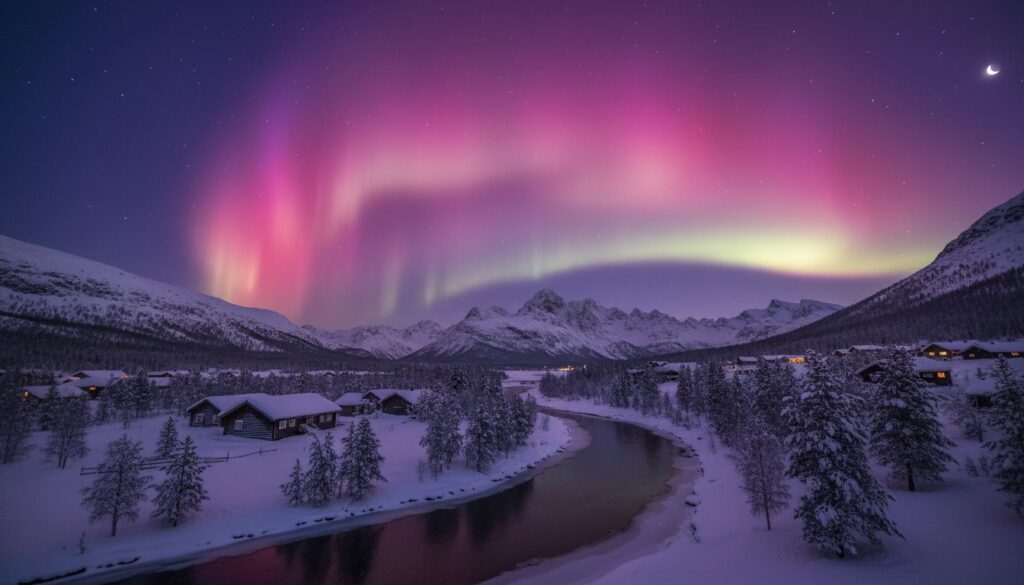
Few natural phenomena inspire awe the way the northern lights do. That curtain of green, purple, and white shimmering across a pitch-black sky is the kind of experience people plan for years, and Scandinavia sits right at the heart of the aurora borealis zone. But timing matters enormously. Go too early in autumn or too late in spring, book the wrong country, or show up during a stretch of overcast skies, and you might spend a week staring at clouds. This guide covers exactly when and where to go across Norway, Sweden, and Finland so you can make the most of your trip.
Quick Answer: Best Months at a Glance
| Month | Darkness Level | Aurora Probability | Temperature | Best Country |
|---|---|---|---|---|
| September | Good | High (equinox boost) | Mild | Norway, Sweden |
| October | Very Good | High | Cool | All three |
| November | Excellent | Good | Cold | Finland, Sweden |
| December | Peak | Moderate (clouds) | Very cold | Norway (indoor culture) |
| January | Peak | Moderate (clouds) | Bitterly cold | Sweden (Abisko) |
| February | Excellent | High | Cold | All three |
| March | Very Good | Very High (equinox boost) | Improving | All three |
| April | Declining | Low–Moderate | Mild | Southern Norway |
The sweet spot for most travelers is late February through mid-March: skies tend to be more stable, temperatures are slightly more bearable, and the equinox effect gives aurora activity a natural boost.
What Makes Scandinavia the World's Best Aurora Destination?

Scandinavia straddles the auroral oval, the ring-shaped zone around the magnetic pole where charged solar particles most reliably collide with Earth's atmosphere. Destinations like Tromsø in Norway, Abisko in Sweden, and Saariselkä in Finland all sit above the 68th parallel, which puts them directly inside this band.
Beyond geography, the region offers a combination of excellent infrastructure, experienced tour operators, and a dense network of remote wilderness areas with minimal light pollution. You can chase the lights on a snowmobile in Finnish Lapland, from a heated glass igloo in Sweden, or aboard a ship sailing through Norwegian fjords. Few other aurora destinations combine this level of accessibility with genuine wilderness.
For destination inspiration and trip planning across the region, Scandinavia Holiday's destinations guide is a good starting point for comparing regions.
The Science Behind the Northern Lights: KP Index Explained
Understanding what drives the aurora helps you plan smarter. The lights form when solar wind (a stream of charged particles from the sun) interacts with gases in Earth's upper atmosphere. The energy released creates the glowing bands and curtains that make for such dramatic photographs.
The KP index is the single most useful number for aurora chasers. It runs from 0 to 9, measuring global geomagnetic activity. Here's what each range means for Scandinavia:
- KP 0–2: Aurora possible only at high latitudes (Svalbard, northern Lapland)
- KP 3–4: Aurora visible across most of northern Scandinavia including Tromsø, Abisko, Rovaniemi
- KP 5+: Aurora can be seen much further south, potentially reaching southern Norway, Stockholm, or Helsinki
- KP 7+: Major storm — lights visible across central Europe
For a typical trip to northern Scandinavia, you need a KP of at least 3 for a reliable display. Apps worth downloading before you go include My Aurora Forecast (beginner-friendly), Space Weather (more detailed), and the NOAA Space Weather Prediction Center website for 3-day forecasts.
Why 2025–2026 Is an Exceptional Window to Go
The sun follows an approximately 11-year cycle of activity, moving from solar minimum to solar maximum. We are currently at or very near the peak of Solar Cycle 25, with solar maximum expected around 2025–2026. At solar maximum, the sun produces more solar flares and coronal mass ejections, which means more frequent and more intense aurora displays.
Historically, aurora sightings increase dramatically during solar maximum years. In practical terms, this means travelers planning a northern lights trip in the next year or two have a significant statistical advantage. Even a trip to the southern end of the aurora zone in Norway (places like Bergen, which normally offers marginal aurora chances) has a better likelihood of producing a sighting during this window.
If you've been waiting for the right moment, this is genuinely it.
Best Time by Country
Norway: Best Months and Locations

Norway is the anchor destination for most Scandinavia aurora trips, and for good reason. The coast keeps temperatures moderated by the Gulf Stream, making it less brutally cold than inland Sweden or Finland. Tromsø, roughly 350 km above the Arctic Circle, offers the best balance of accessibility (international flights, excellent infrastructure) and aurora probability.
Peak months in Norway: October, February, and March offer the best combination of darkness, clear skies, and manageable cold.
Top locations in Norway:
- Tromsø: Easiest to reach, widest range of guided tours
- Lofoten Islands: Dramatic fjord backdrops for photography, best in January–February
- Alta: One of the sunniest spots in Arctic Norway due to its inland position
- Svalbard: Extreme location at 78°N, offers 24-hour darkness from November to January
When to avoid: Mid-June through mid-July is out completely due to the midnight sun. Late April and August have too much twilight.
Sweden: Why Abisko Has the Clearest Skies
Abisko is arguably the best single location in all of Scandinavia for aurora viewing, and most travelers don't even know it exists. Located in northern Swedish Lapland, the town benefits from a well-documented microclimate created by the nearby Lake Torneträsk. The lake's water mass pushes clouds away, resulting in statistically clearer skies than almost anywhere else at this latitude.
The Aurora Sky Station at Abisko operates a chairlift to a mountaintop platform specifically designed for aurora viewing. When cloud cover blankets the rest of Scandinavia, Abisko is often clear.
Sweden is also generally more affordable than Norway, which makes it attractive for budget-conscious travelers. The nearby town of Kiruna offers dogsled tours, ice hotel stays, and easy access from Stockholm by overnight train.
Best months in Sweden: January and February are prime, with the clear-sky microclimate at Abisko making it particularly reliable.
Finland: Glass Igloos and Lapland Magic
Finland brings something different to the northern lights experience: extraordinary accommodation concepts that let you watch the lights from bed. The glass igloo resorts around Saariselkä and Kakslauttanen are famous globally, offering thermally heated transparent domes where you can watch aurora displays while staying warm.
Finnish Lapland also offers one of the most complete winter experience packages: reindeer farm visits, husky safaris, and Santa Claus Village in Rovaniemi all sit within easy reach of prime aurora viewing territory.
Best months in Finland: November through March, with January and February offering the longest nights. The shoulder months of September and October bring aurora activity alongside the last traces of autumn color.
Key locations: Saariselkä (best overall), Inari (remote and pristine), Rovaniemi (most accessible, southernmost aurora zone edge).
Month-by-Month Breakdown Across Scandinavia
September and October
These months offer something competitors rarely emphasize: the equinox effect. Around March 20 and September 22, Earth's orientation relative to the sun creates favorable magnetic field geometry (the Russell-McPherron effect), enhancing aurora activity. Studies of historical geomagnetic data consistently show elevated KP index averages around the equinoxes.
In September, you still have autumn foliage in the forests of Swedish Lapland, milder temperatures, and genuine darkness returning after the midnight sun season. October brings longer nights and the first reliable snowfall at higher elevations. These are excellent shoulder-season months for travelers who dislike extreme cold.
November and December
The nights get dramatically longer, which means more viewing hours per night. The tradeoff is increased cloud cover (particularly in coastal Norway) and temperatures that can drop well below -20°C inland. December also brings holiday crowds to Lapland, especially Rovaniemi.
This is when accommodations like snow hotels and glass igloos in Finland come into their own. Indoor aurora viewing options reduce the exposure risk significantly.
January and February
These are the coldest months, but also among the most rewarding for dedicated aurora chasers. Skies tend to be colder and drier than in autumn, which paradoxically reduces cloud cover in many inland areas. Abisko, Sweden, reaches its statistical peak for clear nights in late January and February.
Aurora displays in midwinter can last for hours. The combination of deep darkness, crisp air, and potential for heavy snowfall makes for stunning photography conditions.
March and April

March is the month most experienced aurora guides recommend. The spring equinox boosts geomagnetic activity around March 20, nights are still long (roughly 12 hours of darkness by mid-March), and the weather pattern is more stable than deep winter. Temperatures have typically moderated enough to make outdoor viewing more comfortable.
April becomes marginal quickly. By mid-April, twilight is creeping back across northern Scandinavia and aurora windows shrink. Early April in northern Norway and Sweden can still produce sightings, but it's a gamble.
Norway vs. Sweden vs. Finland: Which Is Right for You?
| Factor | Norway | Sweden | Finland |
|---|---|---|---|
| Aurora probability | High | Very High (Abisko) | High |
| Cost | Expensive | Moderate | Moderate |
| Accessibility | Excellent (direct flights) | Good (Stockholm hub) | Good (Helsinki hub) |
| Unique experience | Fjords, ship tours | Ice Hotel, Abisko station | Glass igloos, reindeer |
| Best for photography | Yes (dramatic scenery) | Yes (clear skies) | Moderate |
| Family-friendly | Good | Good | Excellent (Santa Village) |
| Best months | Oct, Feb, Mar | Jan, Feb | Nov–Mar |
Best Hours to Watch Each Night
Aurora activity follows a loose daily cycle tied to Earth's rotation. The peak viewing window is typically 10pm to 2am local time, with activity often peaking around magnetic midnight (approximately 11pm–1am in most of Scandinavia).
Practically speaking, plan to be outdoors by 9:30pm and give yourself at least three hours. If a display starts, it can end within minutes or evolve for several hours. Patience is essential. Set an alarm for midnight if you plan to go to bed early, as some of the most dramatic displays happen unexpectedly.
Accommodation That Maximizes Your Chances
Where you sleep directly affects how many aurora opportunities you have:
- Glass igloos (Finland/Sweden): Watch from bed. No need to get up and dress.
- Aurora cabins with panoramic windows (Norway): Similar concept, more affordable
- Remote wilderness lodges: Minimal light pollution, maximum sky exposure
- Snow Hotel, Jukkasjärvi (Sweden): Novel, but rooms are below freezing; better for day visits
- Urban hotels (Tromsø, Rovaniemi): Convenient but require driving outside city for dark skies
For more inspiration on planning your Scandinavian trip, browse the Scandinavia Holiday inspiration section for ideas on combining northern lights with other local experiences.
What to Do If You Don't See the Lights
Every experienced northern lights traveler has a story about a week of clouds. It happens. The consolation is that northern Scandinavia in winter offers a remarkable density of alternative experiences:
- Husky sledding: Available from Tromsø to Rovaniemi, genuinely unforgettable
- Snowmobile safaris: Cover large distances into wilderness areas
- Ice fishing: A slow, meditative experience through holes cut in frozen lakes
- Sauna culture in Finland: The Finnish sauna tradition is a UNESCO-recognized cultural practice
- Reindeer farm visits: Authentic Sami cultural experiences in Norwegian and Swedish Lapland
- Ski touring: Northern Norway and Sweden have excellent backcountry terrain in winter
The reality is that travelers who embrace the full winter Arctic experience tend to leave satisfied even without lights. Those who come exclusively for the aurora often leave disappointed regardless of conditions.
Photography Tips for Capturing the Aurora
A smartphone alone won't do the lights justice on most nights, though recent flagship phones (iPhone 15 Pro, Samsung Galaxy S24) with night modes perform surprisingly well during intense displays. For serious photography:
- Aperture: As wide as possible, f/1.8–f/2.8 ideal
- ISO: 800–3200 depending on display intensity
- Shutter speed: 5–15 seconds (shorter for fast-moving displays to avoid blur)
- Lens: Wide-angle 14–24mm to capture the full arc
- Tripod: Non-negotiable at these exposure times
- Focus: Switch to manual, focus on a distant star or infinity
For the best landscape backdrops, Norwegian fjords and Lofoten provide drama, while frozen lakes in Abisko and Finnish Lapland offer perfect reflections in early winter before heavy snowfall.
How Long Should You Plan Your Trip?
Four nights is the absolute minimum, and even then you're gambling on weather. Seven nights is the sweet spot that most experienced guides recommend. With a week, you have enough flexibility to move between locations if clouds follow you, and you're statistically likely to get at least 2–3 clear nights.
For Norway and Sweden, self-driving is a rewarding option if you're comfortable on icy roads (winter tyres are mandatory and rental cars come equipped). For Finland, especially around Rovaniemi and Saariselkä, organized packages that bundle transfers, accommodation, and activities tend to offer the best value and logistics. You can explore trip ideas through the Scandinavia Holiday homepage to compare different itinerary structures.
Frequently Asked Questions
Can you see the northern lights in Copenhagen or Stockholm?
Rarely under normal conditions. Copenhagen (55°N) and Stockholm (59°N) are too far south except during exceptionally strong geomagnetic storms (KP 6 or higher). During Solar Cycle 25's peak, these events are more frequent than usual, so it's not impossible, but you shouldn't plan a trip around it.
Is Iceland part of Scandinavia for aurora purposes?
Geographically, Iceland is not part of Scandinavia (which refers to Norway, Sweden, and Denmark). It is sometimes grouped under the broader term Nordic countries alongside Scandinavia and Finland. For aurora purposes, Iceland sits at roughly the same latitude as northern Norway and offers comparable aurora probability, but with different weather patterns and a distinct landscape character. It deserves its own consideration as an aurora destination rather than being lumped in with Scandinavia.
What KP level do I need for Scandinavia?
For destinations above the Arctic Circle (Tromsø, Abisko, Rovaniemi), KP 3 is usually sufficient for a visible display. For locations around 65°N, aim for KP 4. Southern Scandinavia requires KP 6 or higher.
What are the best aurora apps for tracking forecasts?
My Aurora Forecast is the most user-friendly option for beginners, showing local probability based on your GPS position. Space Weather offers more granular data including solar wind speed and density. The NOAA 3-day forecast is the most accurate for planning purposes but requires some literacy in space weather data. Combine all three for the best picture.
Article created using Lovarank