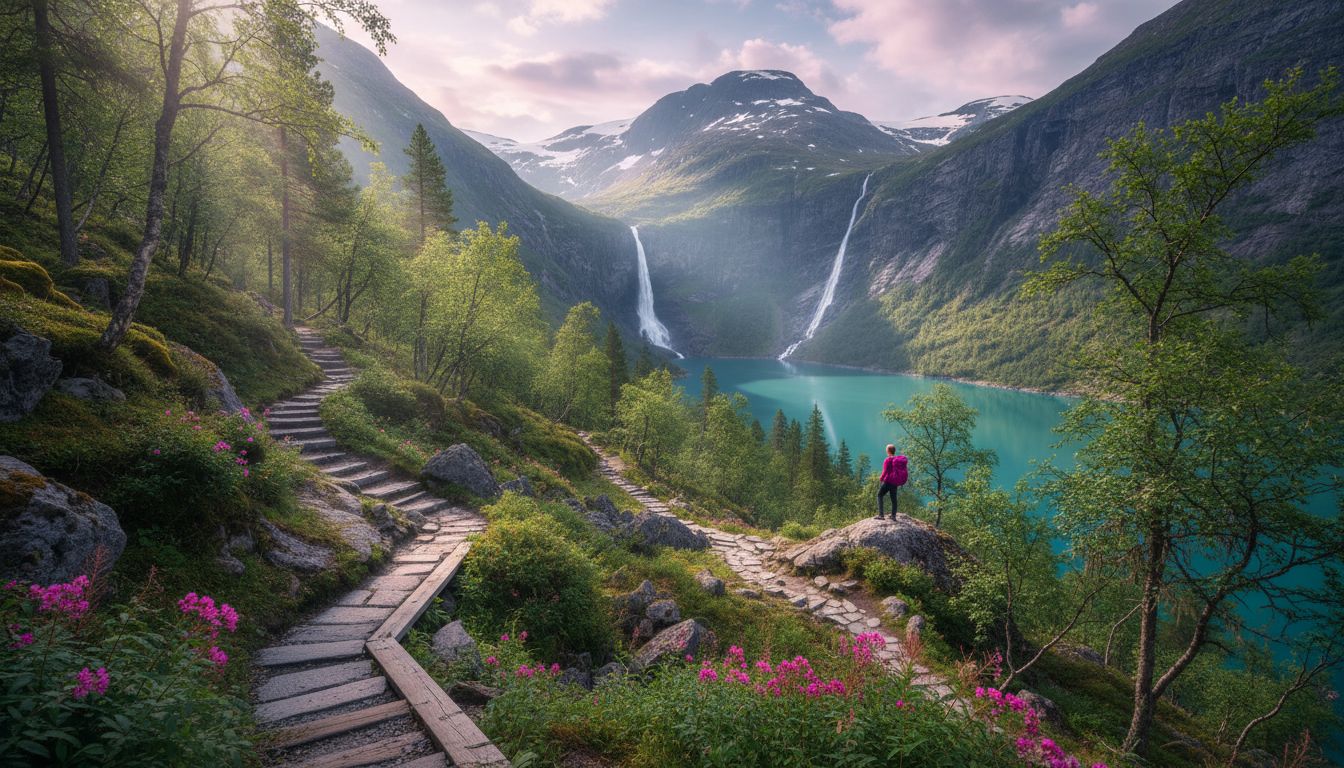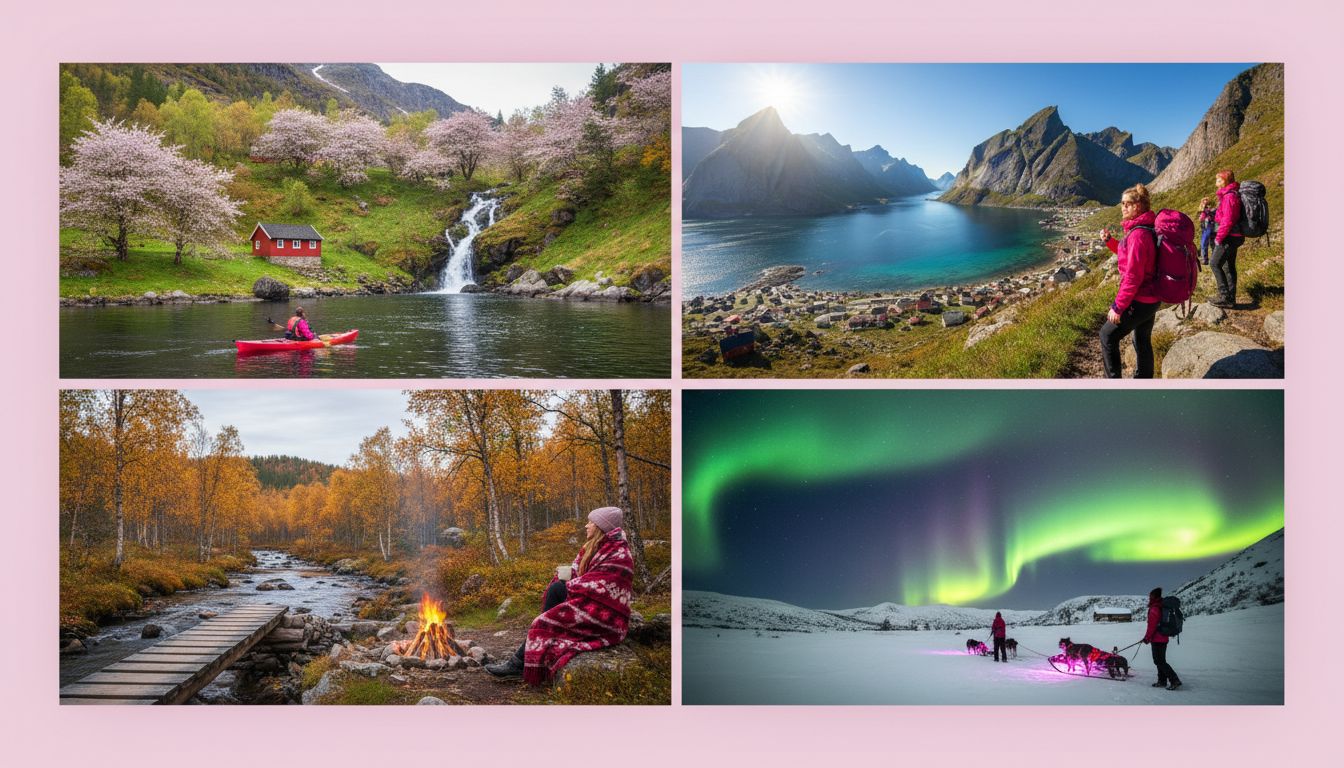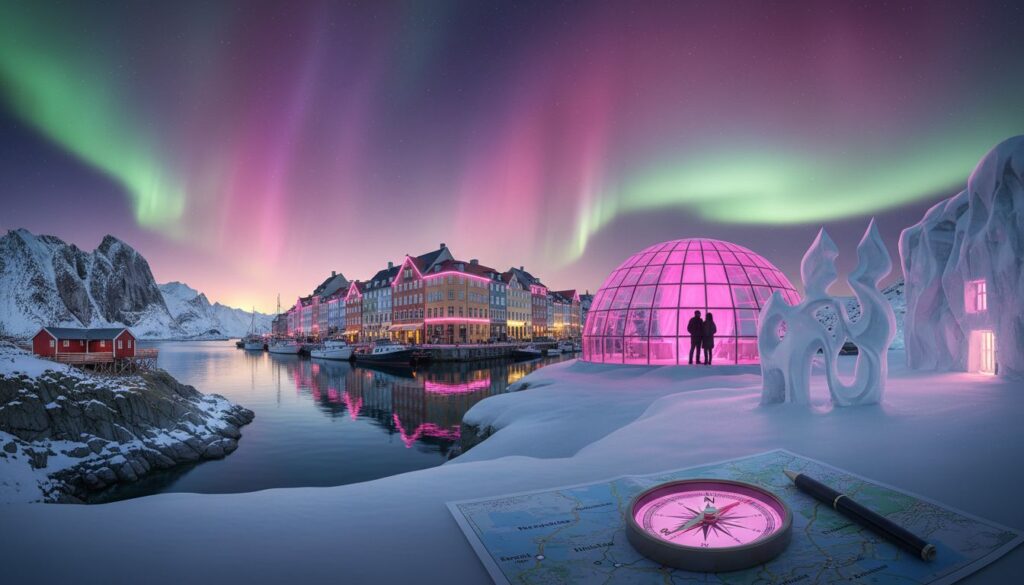
Scandinavia has a way of stopping you mid-sentence. You're trying to describe a fjord at golden hour, or the way aurora borealis unfolds across a dark Finnish sky, and the words just don't quite land. That's the thing about this corner of the world — it earns its reputation not through hype but through sheer, undeniable beauty and an ease of travel that makes even first-timers feel confident. Whether you're drawn to dramatic Norwegian coastlines, Stockholm's island-hopping charm, or the cozy Danish concept of hygge lived out in Copenhagen's candlelit cafés, there is genuinely something here for every kind of traveler.
This guide covers the top 10 places to visit in Scandinavia, with honest notes on what makes each one worth your time, the best season to go, and a few things most travel guides won't tell you. For broader trip inspiration before you dive in, the Scandinavia Holiday destinations hub is a great starting point.
Quick Overview: Best For at a Glance
| Destination | Best For |
|---|---|
| Bergen, Norway | Fjord access, photographers |
| Oslo, Norway | Culture, history, city breaks |
| Lofoten Islands, Norway | Wild landscapes, adventure |
| Stockholm, Sweden | City life, design, archipelago |
| Copenhagen, Denmark | Food, hygge, families |
| Tromsø, Norway | Northern Lights |
| Helsinki, Finland | Architecture, quirky culture |
| Geirangerfjord, Norway | UNESCO scenery, cruises |
| Gothenburg, Sweden | Seafood, laid-back vibe |
| Rovaniemi, Finland | Winter magic, families |
1. Bergen, Norway

Best for: Photographers, fjord explorers, first-time visitors to Norway
Bergen is arguably the single best base for anyone visiting Scandinavia for the first time. Sitting wedged between seven mountains and the edge of Scandinavia's most spectacular waterways, the city punches well above its size. The UNESCO-listed Bryggen Wharf — a row of medieval timber buildings painted in red, yellow, and ochre — has been the face of Bergen on travel posters for decades, and seeing it in person still delivers.
But Bergen's real value is as a gateway. Day trips from here reach the Sognefjord (the longest and deepest fjord in Norway), the scenic Flåm Railway, and the picture-perfect village of Flåm itself. The famous Norway in a Nutshell route starts here, combining train, ferry, and bus into one of the most rewarding single-day journeys in Europe.
Climbing Mount Fløyen via the funicular gives you a bird's-eye view of the city in about eight minutes. If you want to stretch your legs, trails from the top lead deeper into forested hills.
Best time to visit: May to September for hiking and fjord trips. Bergen is rainy year-round (it's one of Europe's wettest cities), so pack layers regardless.
Getting there: Direct flights from most European hubs. Bergen is also connected to Oslo by a stunning seven-hour mountain railway.
2. Oslo, Norway
Best for: Museum lovers, city culture, sustainable travel
Norway's capital often gets overshadowed by the fjords it sits next to, but Oslo deserves far more than a transit stop. The city has reinvented itself in the last decade with bold architecture and a walkable waterfront that runs from the new Munch Museum past the Oslo Opera House (you can walk on the roof — do it) and into the Aker Brygge dining district.
The Viking Ship Museum on Bygdøy peninsula houses actual 9th-century longships preserved in remarkable condition. Nearby, the Fram Museum tells the story of Norwegian polar exploration in a way that's genuinely gripping. Oslo also has the Vigeland Sculpture Park, one of the world's largest installations of work by a single artist, and it's free to enter.
Oslo is expensive — budget around €100–150 per person per day for meals, transport, and a mid-range hotel — but it's also deeply walkable and many of its best attractions cost nothing.
Best time to visit: June to August for long daylight hours and outdoor activity. December is magical for Christmas markets.
3. Lofoten Islands, Norway

Best for: Photographers, adventure seekers, off-the-beaten-path travelers
Few places in the world have the kind of visual impact that Lofoten delivers from the window of an approaching plane. Jagged peaks rise straight from the sea, tiny red fishing huts (rorbuer) cling to the shoreline, and the water shifts between turquoise and deep navy depending on the hour. It's a landscape that looks almost digitally enhanced, except it's real.
In winter (October to February), Lofoten is one of the best places in Norway to see the Northern Lights, and the fishing village of Henningsvær is a photographer's obsession. In summer, the Midnight Sun keeps the sky lit past midnight, creating a surreal golden glow that makes it hard to sleep. Both experiences are genuinely distinct — the islands aren't just a one-season destination.
Hiking here is exceptional. The trail to Ryten mountain ends above a perfect beach, and the Kvalvika valley hike is one of the most rewarding in all of Norway.
Getting there: Fly into Bodø from Oslo, then take the short ferry, or fly directly to Leknes or Svolvær. The overnight train to Bodø from Oslo is a scenic option.
Best time to visit: February to March for Northern Lights with some daylight; June to July for Midnight Sun and hiking.
4. Stockholm, Sweden
Best for: City lovers, design enthusiasts, families
Stockholm is built across 14 islands where Lake Mälaren meets the Baltic Sea, and the city's relationship with water is central to everything. Ferries are a legitimate form of daily transport here, and in summer, hopping between islands in the Stockholm Archipelago (30,000 islands in total) is one of the great Scandinavian pleasures.
The Gamla Stan (Old Town) is one of the best-preserved medieval city centers in Europe, with cobblestoned alleys, the Royal Palace, and an atmospheric tangle of restaurants and craft shops. The Vasa Museum, which houses a 17th-century warship raised from the harbor floor after 333 years, is among the most visited museums in Scandinavia, and for good reason.
For design and food, Stockholm consistently punches at the global level. The Östermalm Food Hall is a cathedral to Swedish culinary produce, and the city's furniture and interior design heritage (think the cultural home of IKEA) is visible everywhere from boutique hotels to café interiors.
Best time to visit: June to August for island life; December for Christmas atmosphere and Christmas markets.
5. Copenhagen, Denmark
Best for: Foodies, families, cyclists, first-time Scandinavia visitors
Copenhagen feels approachable in a way that few capital cities do. It's flat, beautifully designed for cycling, and has a quality of life that regularly puts it at the top of global liveability rankings. The city pioneered the New Nordic cuisine movement through restaurants like Noma (now closed to the public but still deeply influential), and the dining scene remains extraordinary at every price point.
The Nyhavn canal district — with its 17th-century townhouses and moored sailboats — is the postcard image of Copenhagen, and it's every bit as charming in person. Nearby, Tivoli Gardens is one of the world's oldest amusement parks, brilliant for families and atmospheric after dark. Rosenborg Castle, set in the middle of the city's King's Garden, holds the Danish Crown Jewels.
Copenhagen is also a natural gateway to Malmö in Sweden via a 35-minute train ride over the Øresund Bridge, making a two-city trip easy.
Best time to visit: May to September. Summer brings outdoor dining and longer evenings; December offers one of Europe's best Christmas atmospheres.
6. Tromsø, Norway
Best for: Northern Lights hunters, winter wildlife, adventurous travelers
If seeing the aurora borealis is on your list, Tromsø should be your first call. Sitting 350 kilometers above the Arctic Circle, it combines reliable Northern Lights conditions (September to March) with a genuine city infrastructure — good hotels, excellent restaurants, and easy access to guided tours. Unlike more remote Northern Lights destinations, you're not roughing it.
From Tromsø, you can do reindeer sledding with Sámi communities, go whale watching between November and January (orca and humpback whales feed in nearby fjords), or take a dog sledding day trip. The Arctic Cathedral, with its dramatic triangular facade, is one of Norway's most photographed buildings.
For travel inspiration across the full range of Nordic experiences, Scandinavia Holiday's inspiration section pulls together ideas across seasons and destinations.
Best time to visit: November to February for Northern Lights and winter wildlife; June for Midnight Sun.
7. Helsinki, Finland

Best for: Architecture lovers, design enthusiasts, unique Scandinavian culture
Finland is sometimes left off Scandinavia itineraries, which is a mistake. Helsinki is a compact, walkable city with a personality entirely its own — shaped by Swedish and Russian influences, a fierce design culture, and one of the world's great sauna traditions. The Senate Square, dominated by the neoclassical Helsinki Cathedral, is a grand open space that anchors the city center.
The Design District is a cluster of studios, galleries, and concept stores celebrating Finnish design heritage (Iittala, Marimekko, Artek). The Ateneum Art Museum houses the national collection of Finnish art. And if you want to do as locals do: book an evening at a traditional public sauna and follow it with a dip in the sea. It's not just a wellness activity — it's a social institution.
Helsinki also serves as the jumping-off point for Tallinn, Estonia (a 2-hour ferry across the Gulf of Finland), which is increasingly popular as a day trip or overnight extension.
Best time to visit: June to August for the best weather; December to March for snow landscapes and potential Northern Lights in northern Finland.
8. Geirangerfjord, Norway
Best for: UNESCO scenery, cruise travelers, hikers, photographers
Geirangerfjord is what most people picture when they think of Norwegian fjords. A UNESCO World Heritage Site alongside the Nærøyfjord, it cuts inland for 15 kilometers with 1,400-meter cliff walls on either side, multiple cascading waterfalls (including the famous Seven Sisters and Suitor falls), and abandoned mountain farms clinging to ledges that seem physically impossible to reach.
The nearby viewpoint at Dalsnibba (1,476 meters) looks directly down into the fjord in a way that makes even experienced travelers go quiet. The village of Geiranger at the end of the fjord is small but well set up for visitors, with accommodation at various price points and fjord kayaking available in summer.
Approaching by ferry from Hellesylt is the classic way to see Geirangerfjord, and the boat journey itself is arguably the main event.
Best time to visit: May to September; the road to Dalsnibba is closed in winter.
9. Gothenburg, Sweden
Best for: Seafood lovers, laid-back city breaks, families
Gothenburg is Sweden's second city and, many would argue, its most liveable. It has a slower pace than Stockholm, a world-class seafood culture rooted in its fishing port heritage, and a genuinely warm local character that surprises first-time visitors. The Feskekôrka (Fish Church) fish market is as much about the building as the produce, and the surrounding streets are full of independent cafés and restaurants.
The Liseberg amusement park is one of Scandinavia's best, and families regularly make it the centerpiece of a Gothenburg trip. The city's Southern Archipelago — reachable by ferry — offers an island-hopping experience on a smaller, more relaxed scale than Stockholm's.
Gothenburg is also Scandinavia's most significant Viking-age port and sits close to the Rock Carvings at Tanums, a UNESCO site of Bronze Age petroglyphs about 90 minutes north.
Best time to visit: June to August for outdoor dining, island hopping, and Midsommar celebrations.
10. Rovaniemi, Finnish Lapland
Best for: Families with children, winter magic seekers, Northern Lights
Rovaniemi sits right on the Arctic Circle and operates year-round as the official hometown of Santa Claus, which gives it an undeniable pulling power for families. But set aside the Christmas marketing and what remains is genuinely impressive: a snow-covered landscape, reindeer farms, husky safaris, ice fishing, and some of the cleanest winter air you'll encounter anywhere.
The Northern Lights here are visible from late August through April, and the infrastructure for winter tourism is excellent — meaning guided tours are well-organized and accessible even for young children or first-time Arctic visitors. The Arktikum Museum provides a well-curated introduction to Arctic life and culture.
In summer, Rovaniemi offers a different appeal: berry picking, canoeing on the Ounasjoki River, and the strange, luminous glow of a Finnish Lapland summer night.
Best time to visit: December to February for full snow experience; September to March for Northern Lights; June to July for Midnight Sun.
A Few Hidden Gems Worth Adding to Your List
If your schedule has room, three destinations consistently reward travelers who venture beyond the obvious:
- Ålesund, Norway sits on a series of islands and has one of the most coherent concentrations of Art Nouveau architecture in Europe, rebuilt after a 1904 fire. It's also a direct gateway to the Geirangerfjord by road.
- Visby, Sweden on the island of Gotland is a walled medieval city that looks like it was built for a film set. The preserved city walls, Gothic church ruins, and rose-covered lanes are genuinely extraordinary.
- The Faroe Islands (technically an autonomous Danish territory) have been building a reputation as one of the world's most dramatic hiking destinations — vertiginous sea cliffs, waterfalls dropping into the ocean, and almost no crowds by European standards.
Practical Travel Notes
Getting around: Norway, Sweden, and Denmark use different currencies (NOK, SEK, DKK). Finland uses the euro. Card payments are accepted almost everywhere — you'll rarely need cash.
Cost expectations: Scandinavia is expensive. Oslo and Copenhagen regularly feature in top 10 most expensive European cities lists. Budget €100–200 per person per day for a comfortable mid-range experience. Norway tends to be the priciest; Denmark and Sweden are slightly more forgiving.
Season summary: Summer (June–August) brings Midnight Sun, hiking, and outdoor dining. Winter (November–March) delivers Northern Lights, skiing, and snow landscapes. Spring and autumn are quieter and cheaper, with most major attractions still open.
Interrail/Eurail passes cover train travel across Norway, Sweden, Denmark, and Finland and can offer significant savings for multi-country trips. The Bergen to Oslo railway and the Stockholm to Gothenburg route are both spectacular by train.
For personalized guidance on building a Scandinavian itinerary, Scandinavia Holiday connects travelers with local experts who know these destinations in depth.
Frequently Asked Questions
What is the most visited place in Scandinavia?
Copenhagen and Stockholm consistently lead in visitor numbers, but Bergen is often ranked as the top destination specifically within Norway, which draws the largest share of international Scandinavia-focused tourism.
How many days do you need in Scandinavia?
For a meaningful trip covering 3–4 destinations, allow at least 10–14 days. A week works if you focus on one country. Multi-country trips benefit from 2–3 weeks to avoid spending most of your time in transit.
Is Scandinavia worth visiting in winter?
Absolutely. Winter in Scandinavia offers experiences unavailable any other time of year: Northern Lights, dog sledding, ice hotels, and the particular silence of a snow-covered Nordic landscape. Pack for cold (temperatures in northern Norway and Finnish Lapland regularly drop below -20°C) and embrace it.
Which Scandinavian country is cheapest to visit?
Denmark and Sweden tend to be slightly more affordable than Norway, though all three are expensive by European standards. Finland also sits in a similar range to Denmark. Look for accommodation outside city centers and use supermarkets for some meals to manage costs.
Article created using Lovarank