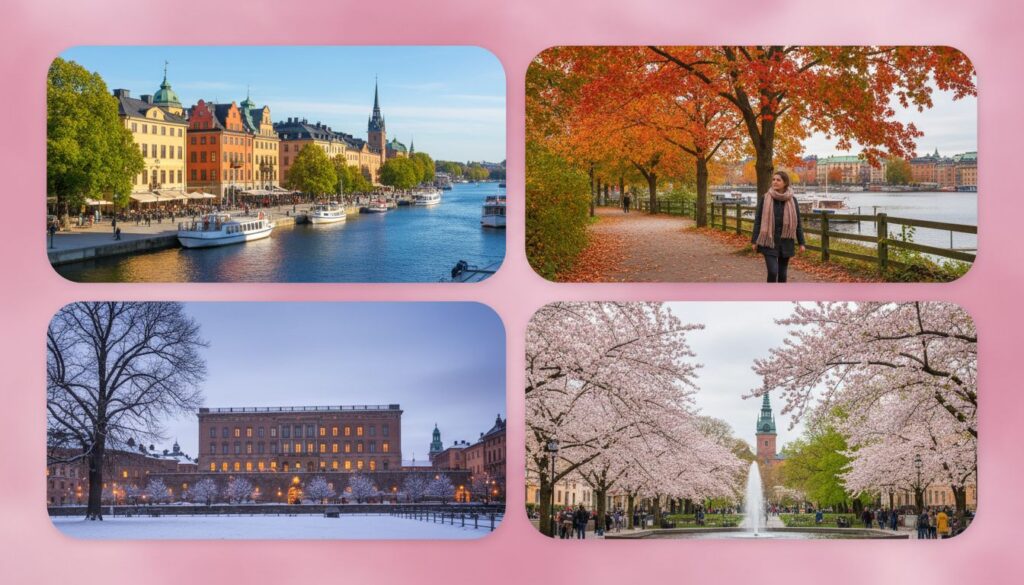
Planning a trip to Stockholm? The Swedish capital rewards visitors year-round, but choosing the right time can make a real difference to your experience. Whether you want to wander through sunlit archipelago islands at midnight, sip glögg at a candlelit Christmas market, or catch cherry blossoms in Kungsträdgården without the summer crowds, Stockholm has a season built for you. This guide breaks down exactly when to go based on weather, events, budget, and your travel style.
Quick Answer: When Is the Best Time to Visit Stockholm?
The best time to visit Stockholm is June through August for long days, warm temperatures, and outdoor festivals. If you prefer fewer crowds and lower prices, May and September are excellent shoulder-season alternatives. Winter (December–February) suits travelers drawn to Christmas markets and cozy Scandinavian atmosphere, while spring (March–May) offers a quieter, more local experience.
Stockholm's Climate at a Glance

Stockholm sits at roughly 59°N latitude, which gives it dramatic seasonal swings in both temperature and daylight. Summers are mild and bright, winters are cold and dark but rarely brutal. The city sits between Lake Mälaren and the Baltic Sea, which moderates temperatures compared to other places at the same latitude.
| Month | Avg High (°C) | Avg Low (°C) | Daylight Hours | Rainfall (mm) |
|---|---|---|---|---|
| January | 1 | -3 | ~7 hrs | 39 |
| February | 2 | -3 | ~9 hrs | 27 |
| March | 6 | 0 | ~12 hrs | 26 |
| April | 11 | 3 | ~14 hrs | 30 |
| May | 17 | 8 | ~17 hrs | 30 |
| June | 22 | 13 | ~18.5 hrs | 45 |
| July | 24 | 15 | ~18 hrs | 72 |
| August | 23 | 15 | ~15.5 hrs | 66 |
| September | 17 | 10 | ~13 hrs | 55 |
| October | 11 | 6 | ~10 hrs | 50 |
| November | 6 | 2 | ~8 hrs | 53 |
| December | 2 | -1 | ~6 hrs | 46 |
Daylight hours are arguably Stockholm's most important planning factor. In late June, the sun barely dips below the horizon, giving you nearly 19 hours of usable light. By December, you're working with just six hours, which has a real psychological impact on how the city feels.
Summer in Stockholm (June–August)
Summer is Stockholm at its most spectacular. The city opens up completely: outdoor terraces fill with people, the archipelago ferries run full schedules, and the streets of Gamla Stan stay busy well past 10 PM because it simply never gets dark.
June temperatures average around 22°C, with July being the warmest month at 24°C. Rain does fall, particularly in July and August, but showers tend to be short-lived rather than all-day affairs.
The Midnight Sun Experience
Around the summer solstice (June 20–21), Stockholm experiences near-continuous daylight. The sun sets around 10:10 PM and rises again before 3:30 AM. This is genuinely disorienting in the best possible way: you'll find yourself walking along the waterfront at midnight, wondering why the sky still looks like late afternoon. Bring a sleep mask if you're a light sleeper, or lean into the experience and explore the city when the crowds thin out after 9 PM.
Key Summer Events
- Midsommar (Midsummer): Celebrated on the Friday between June 19–25. Swedes leave the city to raise maypoles and dance in the countryside. Stockholm itself gets quieter, which is ideal for visiting museums.
- Stockholm Pride: Late July to early August. One of Scandinavia's largest Pride festivals, with a parade through the city center.
- Stockholm Jazz Festival: Typically held in late July at Skansen, with world-class performers and a beautiful outdoor setting.
- Stockholm Culture Festival: Mid-August, filling the city with free outdoor performances across multiple stages.
Archipelago Season
The Stockholm Archipelago (30,000 islands and islets) is at its absolute best from June through August. Waxholmsbolaget ferries run full routes to outer islands like Sandhamn and Utö. Kayak rentals are widely available. Swimming in the Baltic is actually pleasant, with water temperatures reaching 18–20°C in July. If you visit at any other time of year, many archipelago ferry routes run reduced schedules or stop entirely, so summer is genuinely the best window for island hopping.
Summer verdict: Best for first-time visitors, outdoor enthusiasts, archipelago lovers, and anyone who wants to experience the midnight sun. Book accommodation 3–6 months ahead as hotels fill fast and prices peak.
Autumn in Stockholm (September–November)

September is arguably Stockholm's most underrated month. The summer crowds have thinned, hotel prices drop noticeably, and the city settles into a golden, unhurried rhythm. Temperatures still reach 17°C in early September, which is genuinely comfortable for walking. Djurgården island turns vivid shades of orange and red, and the Vasa Museum and other indoor attractions are far less crowded.
October brings cooler temperatures and shorter days but also dramatic fall color across parks and the archipelago's outer islands. November is the quietest month tourism-wise, cold and grey, though there's a cosiness to Stockholm's café culture (fika is taken very seriously here) that feels authentic in ways that July can't quite replicate.
What to Do in Autumn
- Visit Skansen open-air museum without summer queues
- Walk through Djurgården for fall foliage along the waterfront
- Explore Södermalm neighborhood cafés without the summer tourist rush
- Take a day trip to Uppsala by train before winter sets in
- Attend Stockholm International Film Festival in November
Autumn verdict: Best for budget-conscious travelers, culture-seekers, and those who dislike crowds. September especially offers a near-perfect balance of weather, price, and atmosphere. For inspiration on combining Stockholm with other Nordic destinations in autumn, browse Scandinavia Holiday's destination guides.
Winter in Stockholm (December–February)
Winter Stockholm polarizes travelers, and that's honestly part of its charm. The city is quiet, dark, and genuinely atmospheric. Christmas lights reflect off the cobblestones of Gamla Stan, the Nobel Prize Week brings a ceremonial energy to the city in early December, and Lucia celebrations on December 13th are one of the most beautiful traditions in Sweden.
Temperatures typically hover between -3°C and 2°C. Snow is possible but not guaranteed in the city center, though nearby forests and the outer archipelago see more reliable snowfall. Lake Mälaren occasionally freezes, creating opportunities for ice skating, though this varies by year.
Key Winter Events
- Nobel Prize Week (December 10): The Nobel Prize ceremony and banquet are held at Stockholm City Hall and the Concert Hall. The city has an unusually formal, celebratory energy this week.
- Lucia (December 13): Candlelit processions in churches and public spaces. Stockholm Cathedral hosts a particularly moving ceremony.
- Christmas Markets: The market in Gamla Stan opens late November and runs through December 23rd. Skansen also hosts a traditional julmarknad with craftspeople and festive food.
- Ice Skating: When temperatures cooperate, outdoor rinks open at Kungsträdgården and other locations.
Managing the Polar Night
With only six hours of daylight in December, the darkness is real. Plan your outdoor activities around midday. Stockholm's museums, which are genuinely world-class (the ABBA Museum, Vasa Museum, Fotografiska), make an excellent midwinter focus. The darkness also intensifies the warmth of interior spaces: candles, fireplaces, and the Swedish concept of mys (coziness) feel particularly meaningful against the backdrop of a dark January afternoon.
Winter verdict: Best for travelers drawn to European Christmas atmosphere, culture enthusiasts, and those wanting low prices and uncrowded attractions. Least suitable for outdoor-focused travel or first-time visitors.
Spring in Stockholm (March–May)
Spring arrives slowly in Stockholm. March remains cold (averaging 6°C), but daylight returns quickly and the city shakes off its winter quiet. April brings unpredictable weather ranging from bright sunny days to late snow flurries. May is the real payoff: long warm evenings, cherry blossoms in Kungsträdgården (typically peak in late April to early May), and a city that feels genuinely alive again without the peak-season price tags.
Valborg (Walpurgis Night) on April 30 is a significant local celebration, particularly near universities, with bonfires, singing, and outdoor gatherings as Swedes welcome the spring.
Spring verdict: Best for budget travelers who can handle variable weather, photographers targeting the cherry blossom season, and visitors who prefer a more local, less tourist-heavy experience.
Best Time to Visit by Traveler Type
| Traveler Type | Best Season | Why |
|---|---|---|
| First-time visitors | June–August | Best weather, all attractions fully open, lively atmosphere |
| Budget travelers | November or March | Lowest hotel and flight prices |
| Families with kids | Late June–July | School holiday, warmest weather, outdoor activities |
| Couples | May or September | Shoulder season prices with beautiful weather |
| Photography enthusiasts | Late April (blossoms) or June (midnight sun) | Most dramatic and unique light conditions |
| Foodies | May–September | Fresh seafood, outdoor markets, seasonal Swedish produce |
| Culture/museum focus | October–February | Uncrowded museums, full exhibition schedules |
| Archipelago lovers | July–August | Full ferry schedules, swimming weather, kayaking |
Budget Overview by Season

Stockholm is an expensive city year-round, but costs vary meaningfully by season.
Peak Season (June–August):
- Budget hotels: 900–1,400 SEK/night
- Mid-range hotels: 1,500–2,800 SEK/night
- Flights from major European cities: significantly higher than shoulder months
- Book flights 3–5 months ahead for best rates
Shoulder Season (May, September–October):
- Budget hotels: 700–1,100 SEK/night
- Mid-range hotels: 1,100–2,000 SEK/night
- Best combination of reasonable prices and good weather
- Book 6–8 weeks ahead
Off-Season (November–March, excluding Christmas week):
- Budget hotels: 500–900 SEK/night
- Mid-range hotels: 900–1,500 SEK/night
- Flights often significantly cheaper
- Christmas week (Dec 18–26) is an exception with prices spiking
The Stockholm City Pass offers the best value during shoulder and off-season when you have more time per day for museums without summer queues slowing you down.
Practical Tips for Every Season
What to Pack by Season
- Summer: Light layers (evenings can be cool even in July), a packable rain jacket, sunglasses, and a sleep mask for midnight sun
- Autumn: Waterproof jacket, mid-weight layers, comfortable walking shoes
- Winter: Proper thermal layers, waterproof boots with grip (cobblestones get icy), hat and gloves
- Spring: Waterproof everything, layers you can add or remove as temperatures swing
Transportation Notes
Stockholm's public transport (Tunnelbana metro, buses, trams) runs year-round with consistent service. Bike rentals are available April through October through the city's bike-share scheme. In winter, be aware that day-trip driving can involve icy rural roads. The archipelago ferry network runs reduced schedules from September through May, with some outer island routes suspended entirely in winter.
Mosquitoes in the Archipelago
This is something few guides mention: mosquitoes can be a genuine nuisance in the Stockholm Archipelago in July and early August, particularly on forested inner islands. Pack insect repellent if you're planning overnight stays on islands, especially after rain.
For broader planning ideas across the Nordic region, the Scandinavia Holiday inspiration section is a useful resource for building an itinerary around Stockholm.
Frequently Asked Questions
What is the best month to visit Stockholm?
June and early July offer the best combination of warm weather, long daylight hours, and a fully operational city. September is the best value month, with comfortable temperatures and lower prices than summer.
Is Stockholm worth visiting in winter?
Yes, particularly in December for the Christmas atmosphere. The darkness is real but manageable, and the city's museum culture and cozy café scene are genuinely rewarding. Prices are the lowest of the year outside of Christmas week.
How far in advance should I book accommodation?
For June and July, book 3–6 months ahead. For shoulder season, 6–8 weeks is usually sufficient. Winter travel (excluding Christmas) can often be booked with less lead time.
Does it snow in Stockholm?
Snow is possible from November through March but not guaranteed in the city center. Statistically, January and February are the most likely months for snow cover. The surrounding countryside sees more reliable snowfall than central Stockholm.
Can you see the Northern Lights in Stockholm?
Rarely. Stockholm's latitude and light pollution make Northern Lights sightings uncommon. For a reliable Northern Lights experience, travel north to Swedish Lapland, which is several hours away by flight or overnight train.
Stockholm genuinely earns visits in every season, but your experience will differ dramatically depending on when you go. Summer delivers the iconic version of the city, but the quieter seasons often produce the more memorable moments. For help planning your full Nordic trip beyond just Stockholm, Scandinavia Holiday is a good starting point for building out your itinerary.
Article created using Lovarank